I was home for Thanksgiving, and had plans to climb with some of the Alabama crew upon arriving back in the South. Mitchell, Jaron, Neel, and myself met up for some cragging at Sand Rock, and a pair of climbers we had been chatting with throughout the day mentioned they had just been up in the Linville Gorge. I climbed there a long time ago, during high school, as part of an Outward Bound trip, and backpacked in the area the following summer. I knew about the Linville Trifecta and had dreamed about trying it for a long time, and with two willing partners in Mitchell and Neel, this seemed like the perfect opportunity. Caroline, Mitchell’s girlfriend, offered to let us stay at her family’s mountain house, which was only about an hour and fifteen minute drive from the Table Rock trailhead. So with a willing team and excellent base camp location lined up, we decided to make it happen the following weekend.
The Linville Trifecta is a linkup of three classic moderate climbs in an area of the Linville Gorge known as “The Amphitheater”—a massive rock buttress on the east side of the gorge, accessible via a climbers trail and rappel from the Mountains to Sea Trail. The routes are named “The Mummy,” “The Daddy,” and “The Prow” and there’s a long tradition of climbing all three in a day. The speed record for climbing all three “car to car” is under 90 minutes. Karsten Delap reports a car to car time of 1:24, which as far as I’m aware is the fastest known time, and a mind blowing feat considering the linkup requires an over 3 mile round trip hike and around 1400 feet of climbing. We knew we wouldn’t be setting any speed records, but figured we could get it done in a day. Originally our plan was to climb in a party of three (Mitchell, Neel, and myself) but Neel ended up having to back out mid-week to attend a wedding (not his own).
Over the course of the week, I studied the approach and the route descriptions closely, searched out GPS coordinates for the descent gully and climber’s trail, and compiled all the information I could find into a planning document. Neel, despite not being able to come along, dropped off a massive bag of gear the day before Thanksgiving, including two walkie talkies and a guide pack that would prove invaluable during our ascent. Before long, the moment had arrived, and I set off toward the mountain house to meet up with Mitchell and gear up for our climb.
I arrived at the house in Spruce Pine, NC at around 8:30pm. We planned to get an early start, so we packed our bags with snacks, water, and all the climbing gear we would need for the day, and headed to sleep.
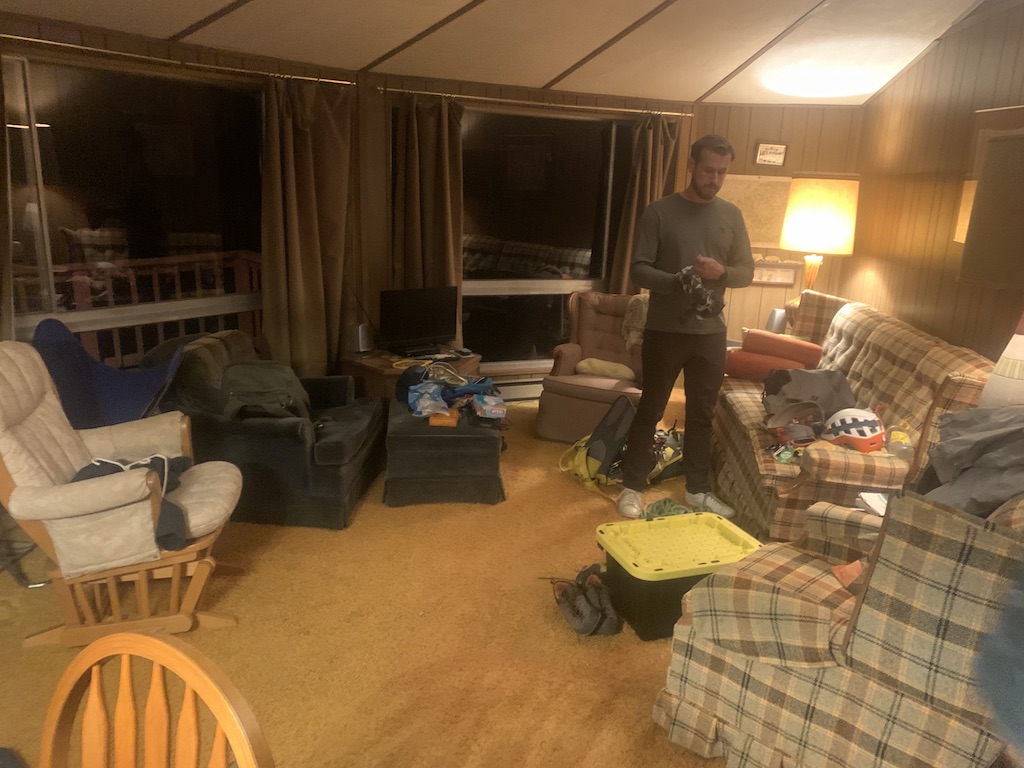
The following morning, we woke up at around 5am and had some breakfast and coffee. Caroline had put together a bag of goodies, including some perfectly medium boiled eggs and sludgy strong coffee–just what we needed for the long day ahead. Mountain adventure is often associated with the image of a Robinson Crusoe archetype–the lonesome hero, living off of nothing but his own wits and grit. Over the past year, I’ve realized that while self-sufficiency is important, this image is ultimately ridiculous. I’m thankful for everyone whose support has allowed me to get out into the mountains–Tina and Bunny, the random person at the ADK Loj who helped me set up my tent on a solo hiking trip, my family, all my climbing partners, Caroline for her part in supporting us, and probably some people I’m forgetting. But I digress.
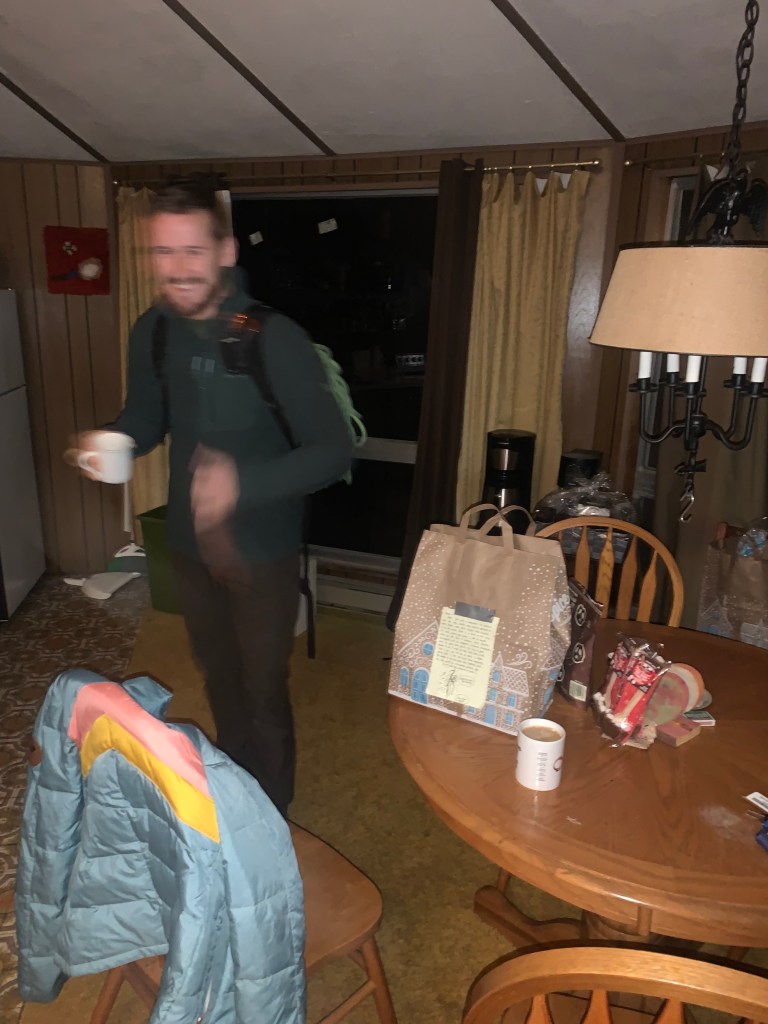
We left the mountain house at 5:30am. The drive wasn’t far in terms of mileage, but it took 1:15 because of the slow and winding dirt road leading up to Table Rock. The first rays of light were just beginning to appear as we cruised along the ridge and into the Table Rock parking lot.
At 6:50am, we began our hike heading south on the Mountains to Sea Trail, which follows an exposed ridge down the east side of the gorge.
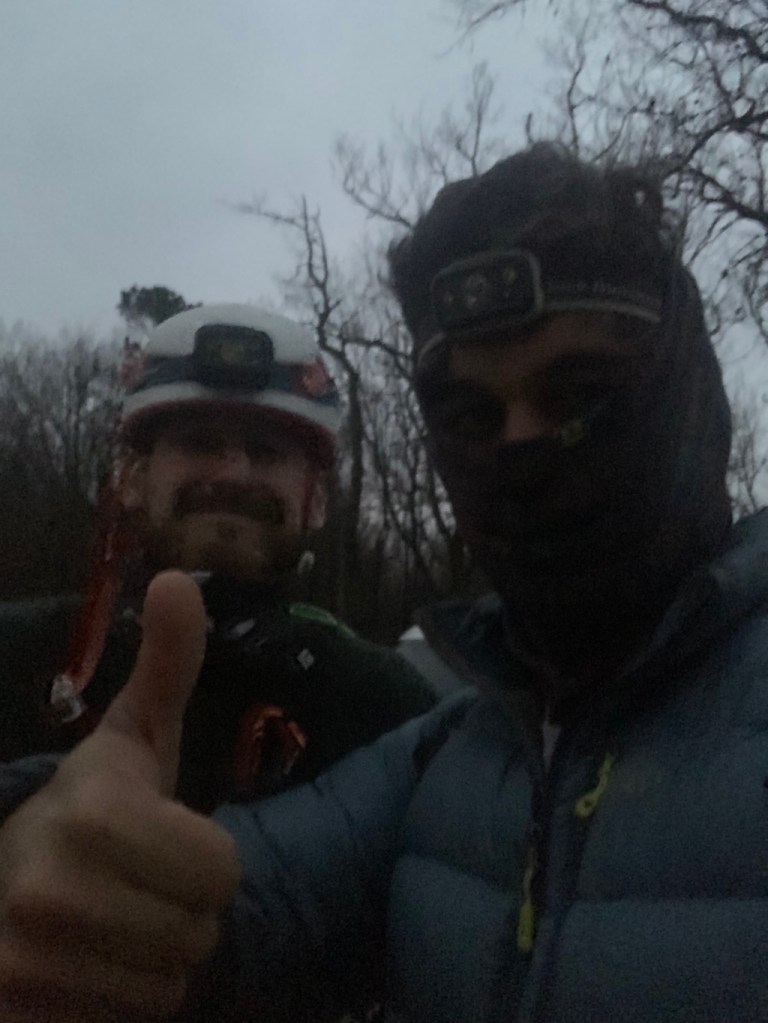
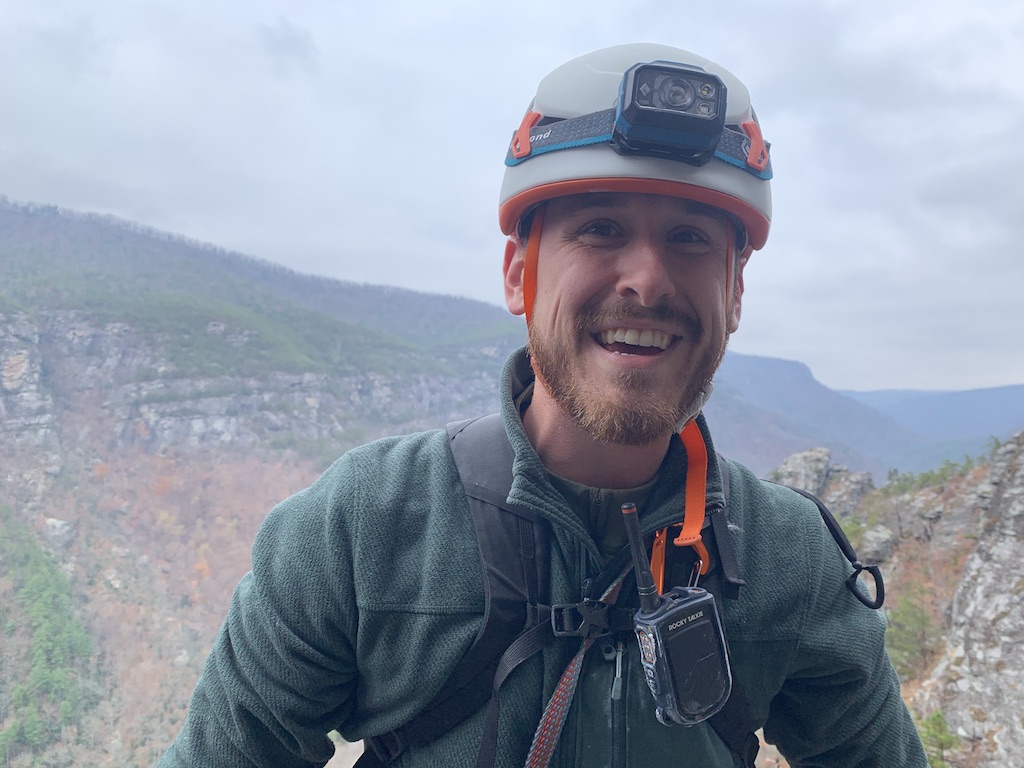
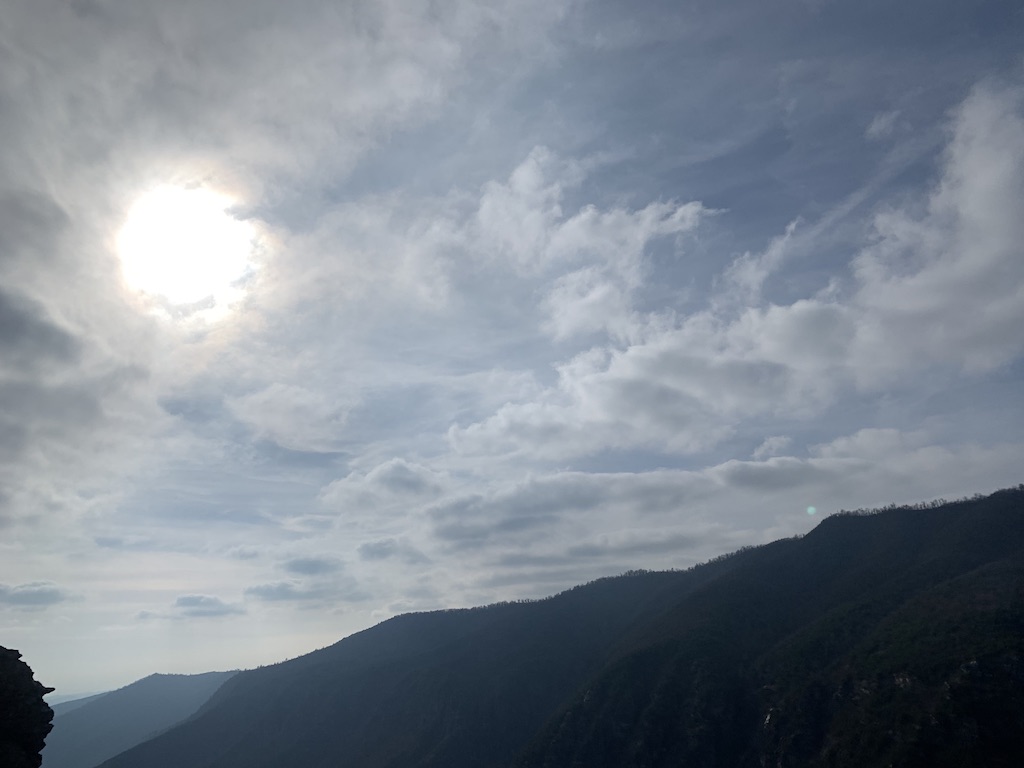
As we hiked, the sun climbed slowly over the horizon, casting pink and orange light over the Gorge. We hustled along with the knowledge that we had a full day ahead, but paused a few times to take in the view.
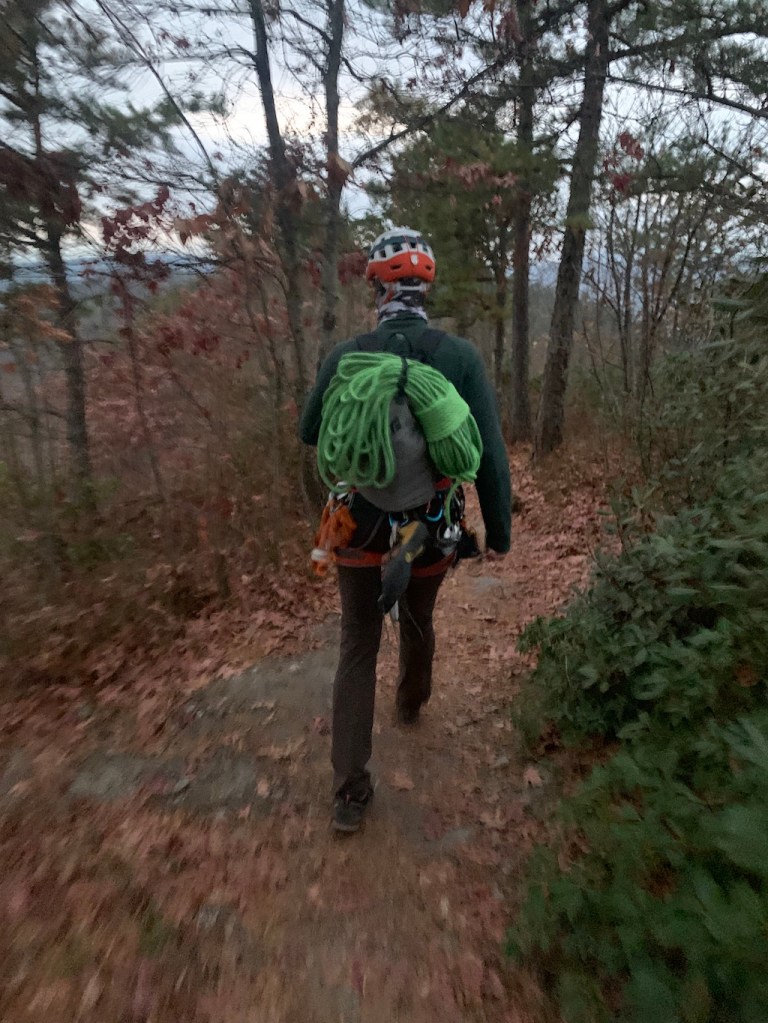
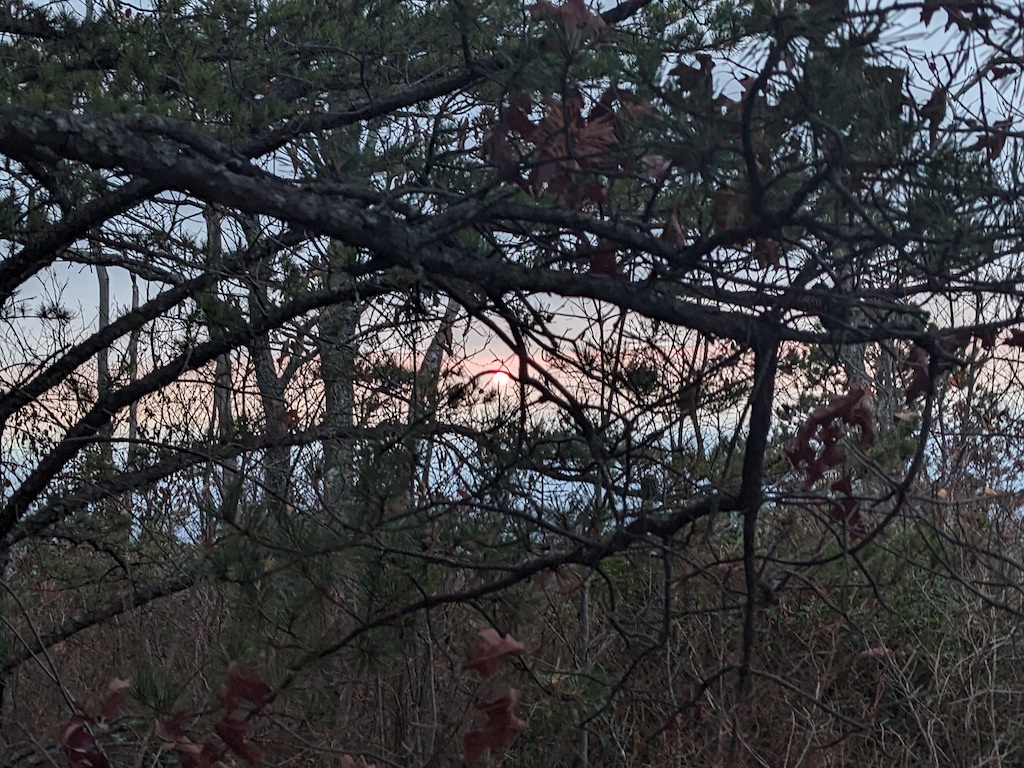
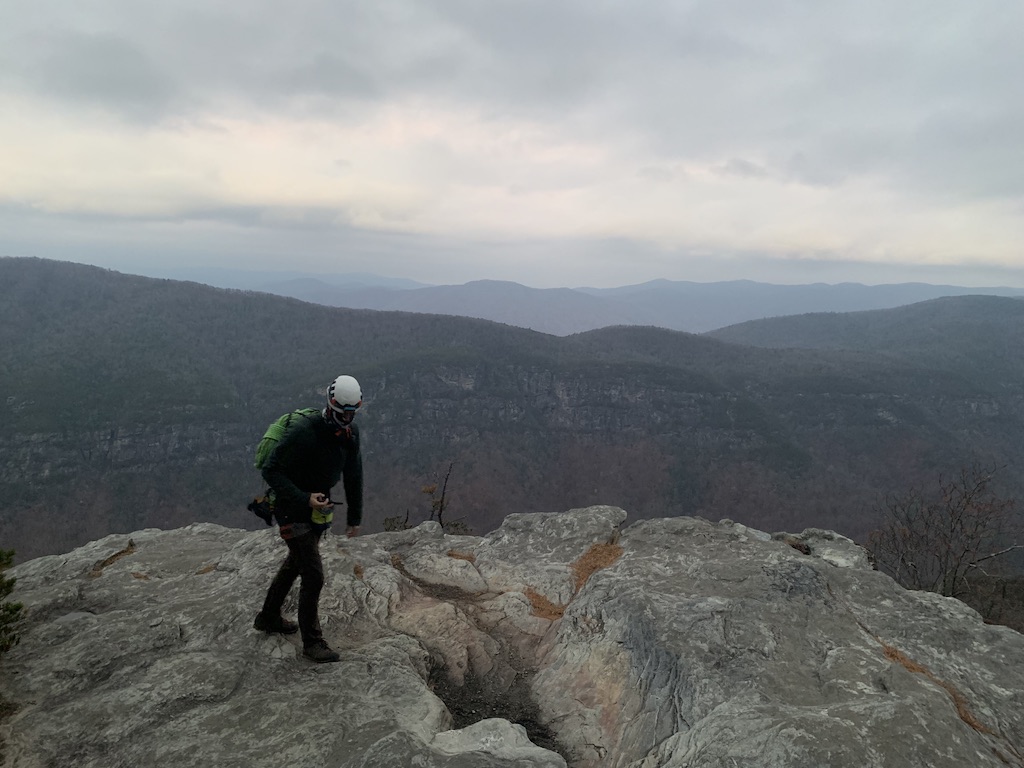
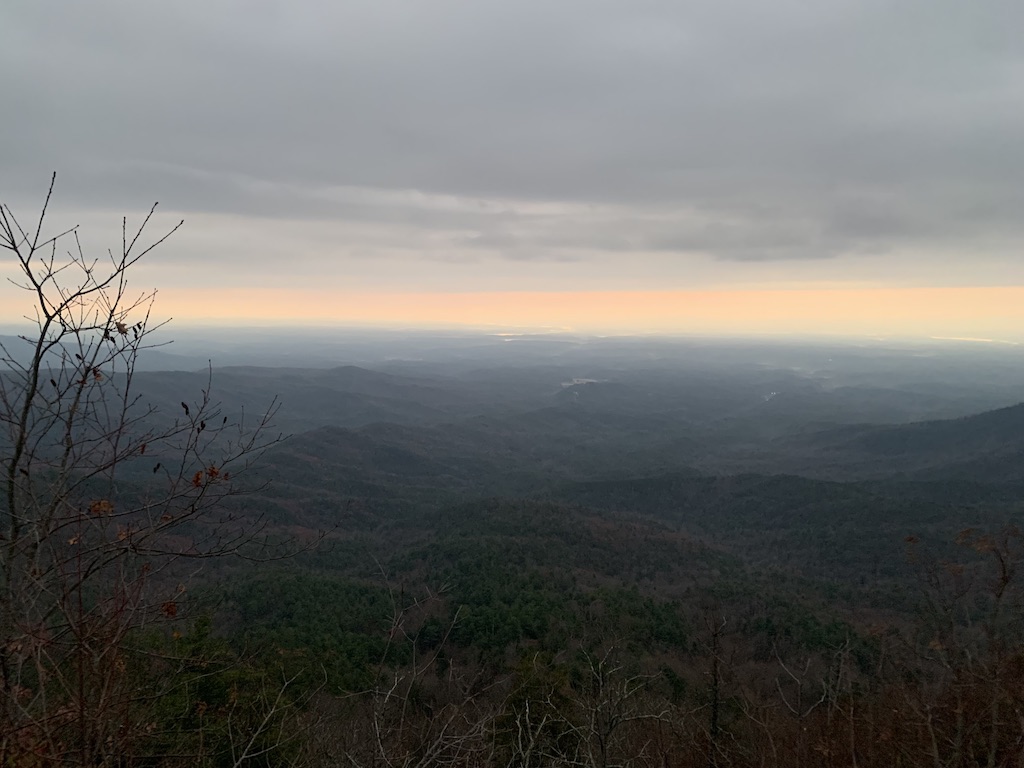
We followed the trail past the Chimneys, a popular beginner’s climbing area, searching for the apocryphal cube of white quartzite that marked the climber’s trail down toward the Amphitheater rappel gully.
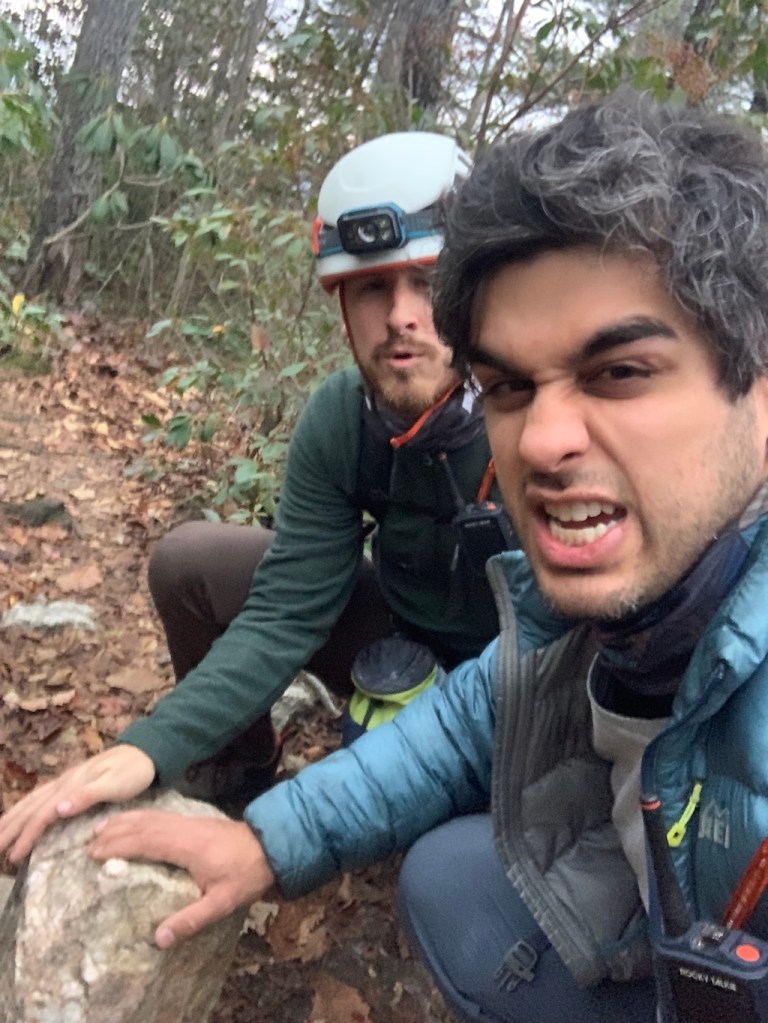
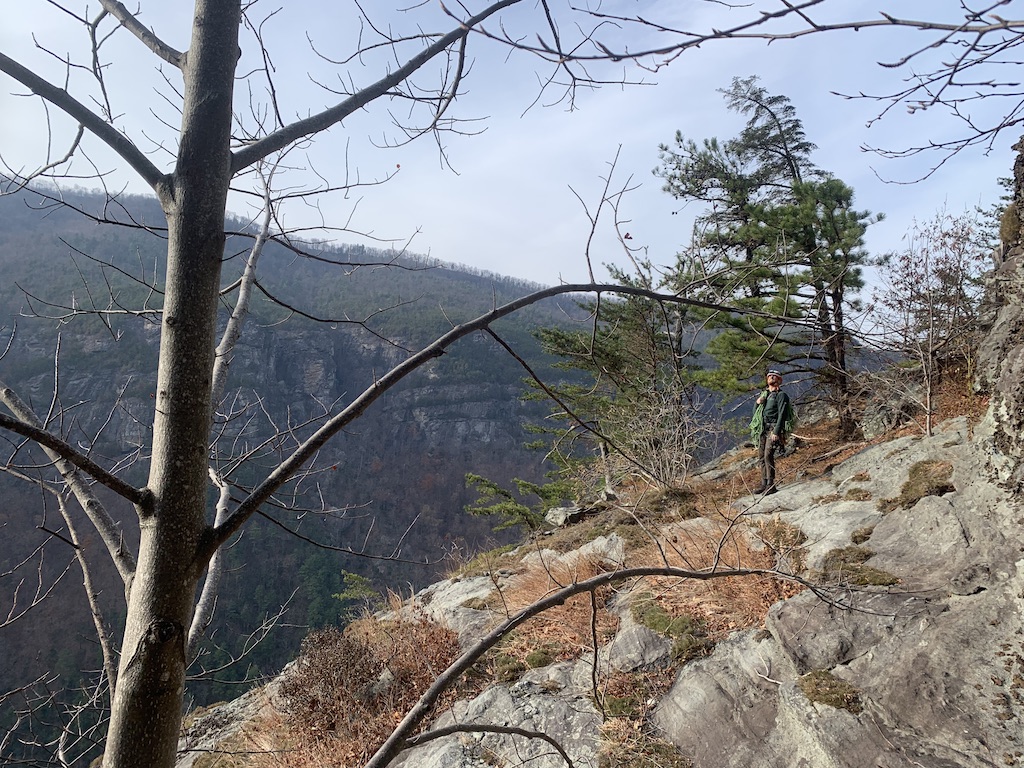
We found the cube and headed downhill toward the rap gully. If adventure necessarily entails some elements of risk or uncertainty, one could say that the adventure proper began here. We hiked down the climbers trail until we found the turn we thought led to the rap gulley, but at some point, we lost the faint trail. All of the sudden, we found ourselves bushwhacking through dense pine forest.
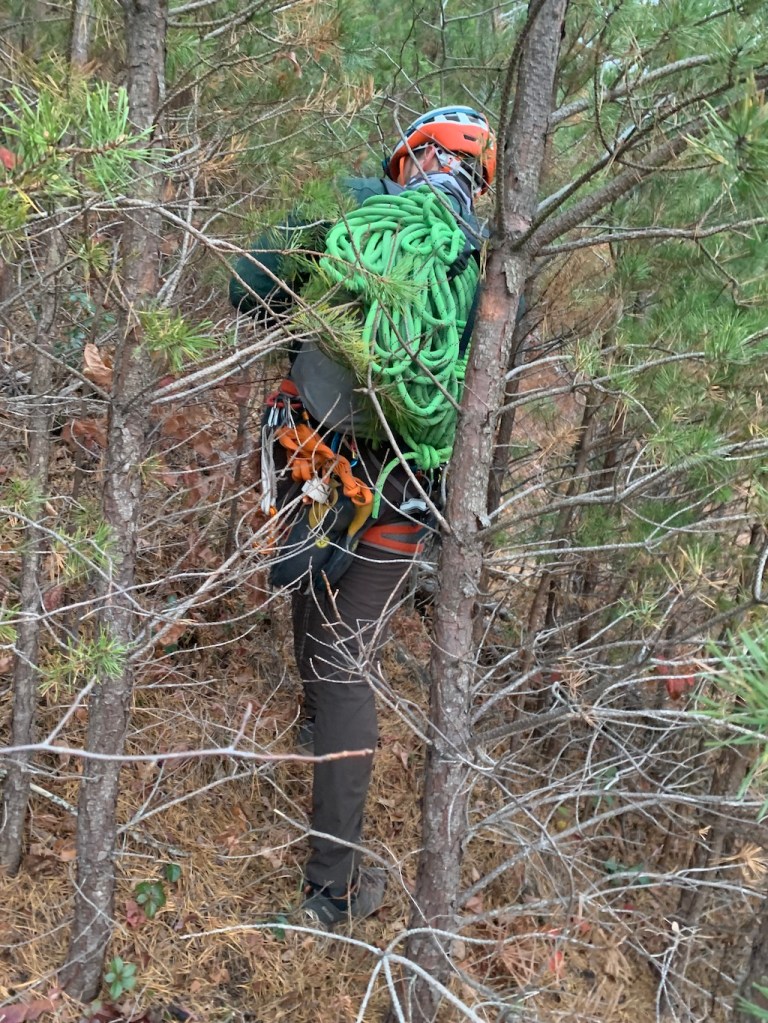
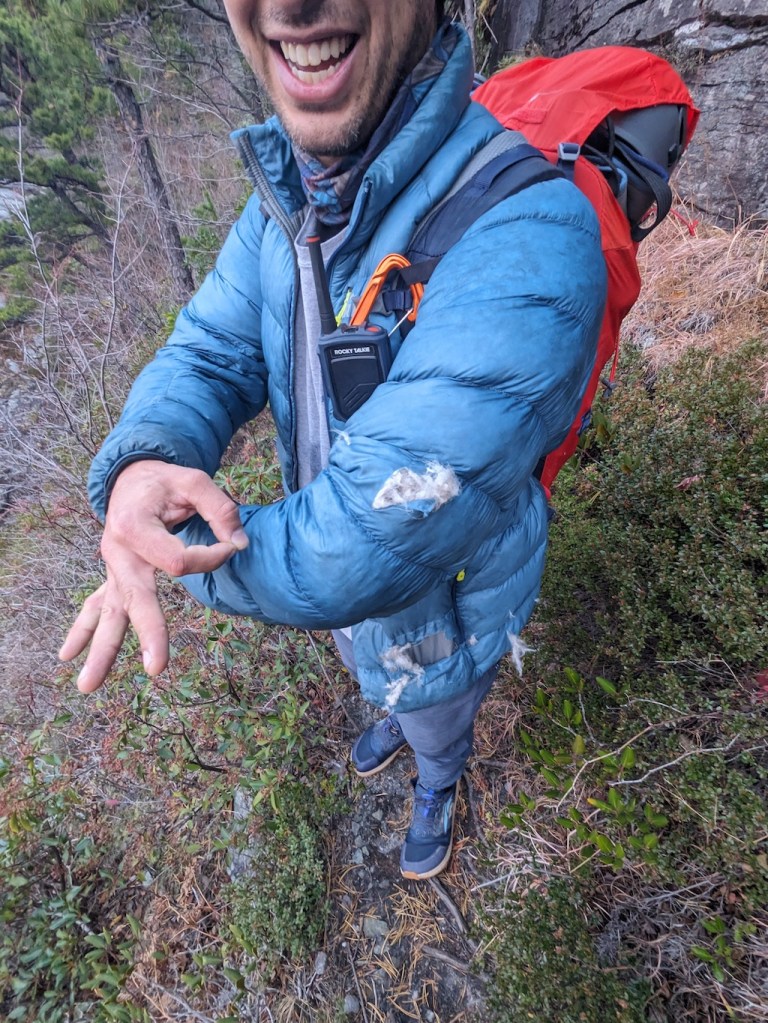
The puffy jacket I borrowed from Mitchell was immediately shredded by the pine branches and I began to shed down feathers. Regretfully, the feathers would continue to float out of the jacket throughout the day, despite my efforts to patch it with athletic tape (no duct tape on hand, which would have done the trick). I kept it in my pack for most of the day, but at some of the colder, shadier belays I chose to wear it, which amounted to a leave no trace violation as the feathers continued to shed. Also, sorry for ruining your jacket Mitchell.
Eventually we happened upon a trail, and followed it down toward where we assumed the rap gully would be. Where the trail ended in an open area near a steep cliff, we found ourselves in a tricky situation: we could clearly see the top of the gully, and were only 20 meters away–but despite its proximity, the complex and steep terrain did not offer any clear way down.
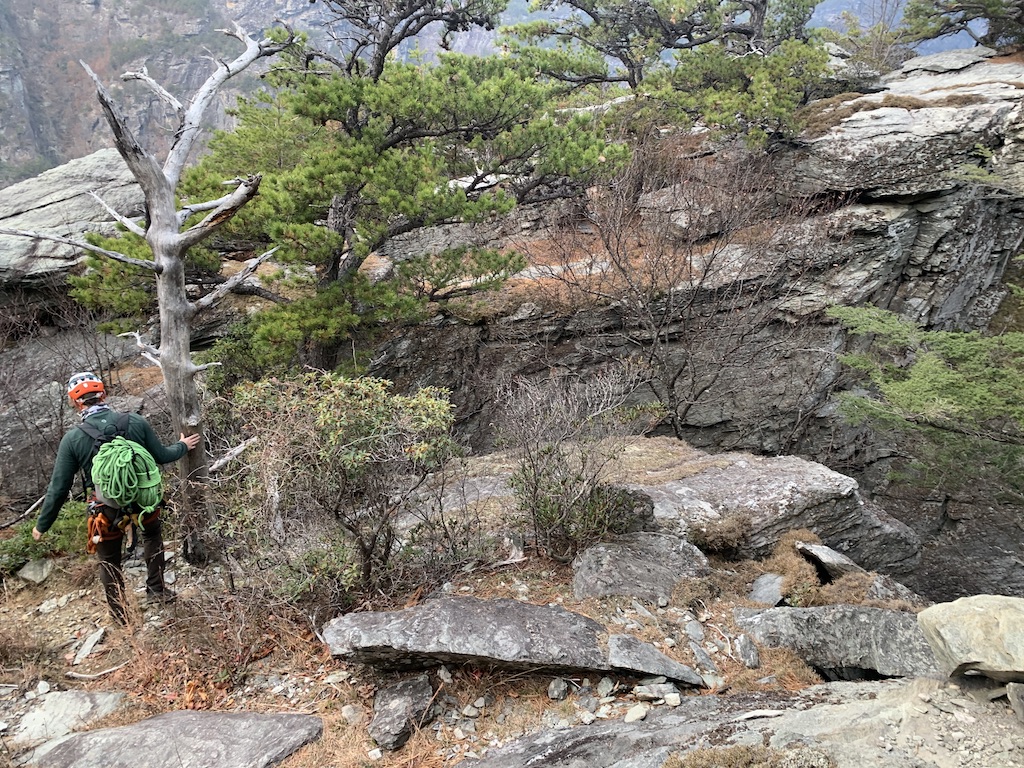
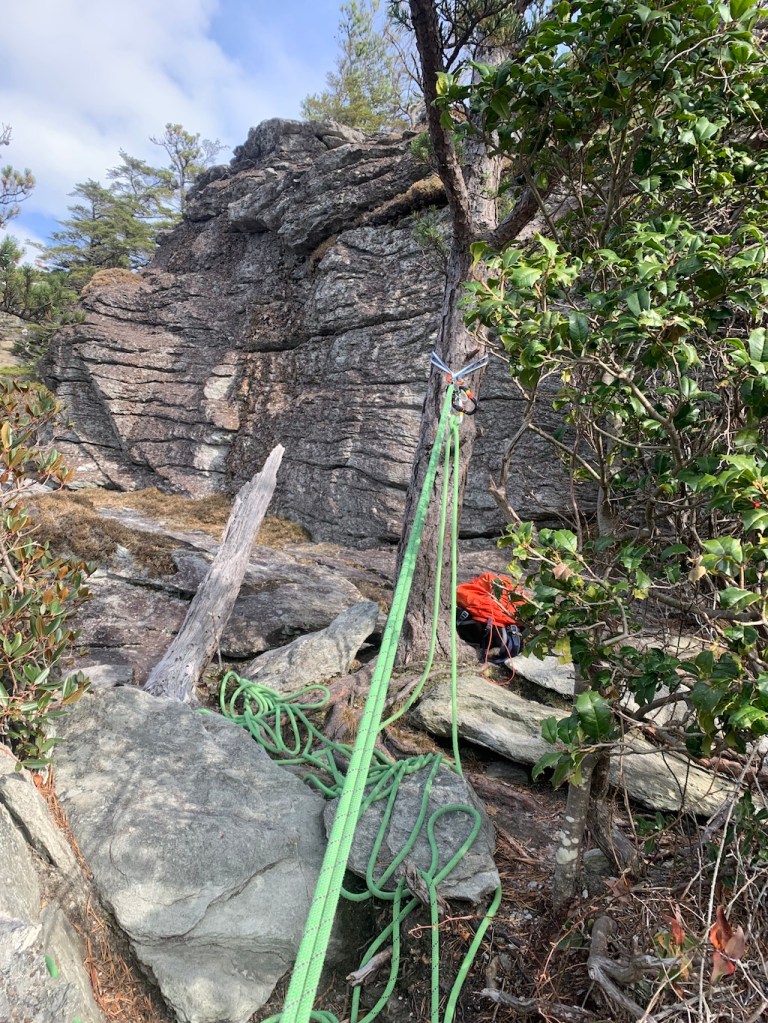
We searched the area for a while and eventually found a way to scramble down some less than vertical terrain and under a gigantic overhanging boulder that eventually led to the top of the gully. There, we were greeted by a bolted anchor with shiny new rappel rings. We racked up, navigated the awkward rappel into the gulley, and scrambled down some loose talus, heading down “skiers left” toward the base of the Mummy.
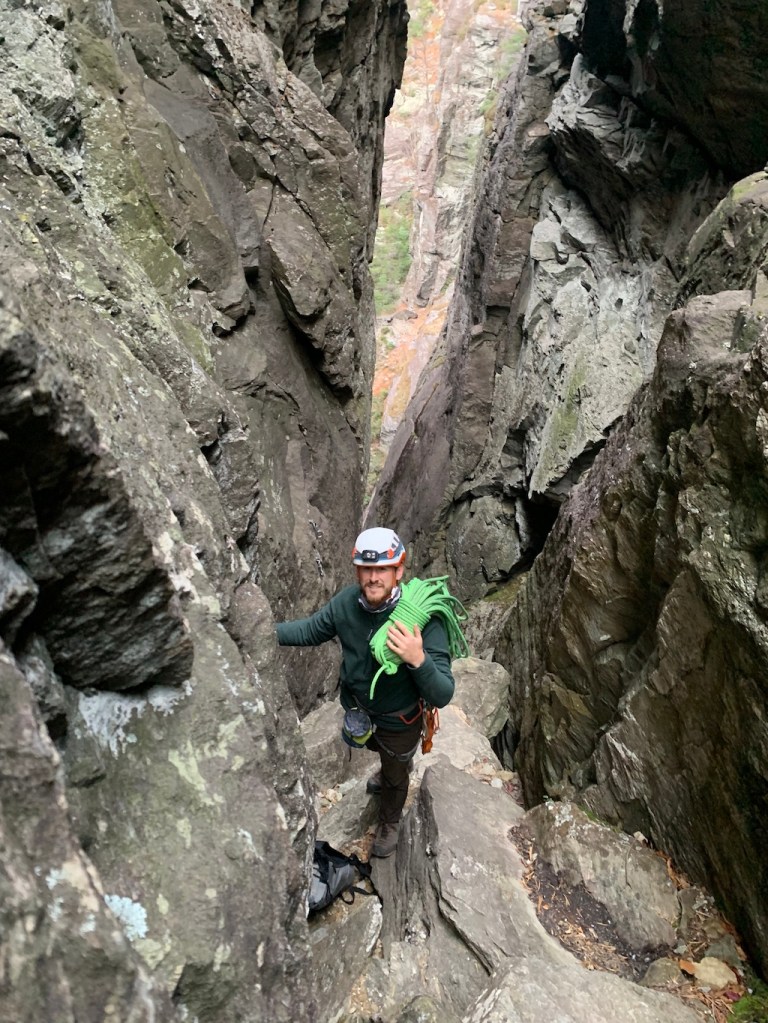
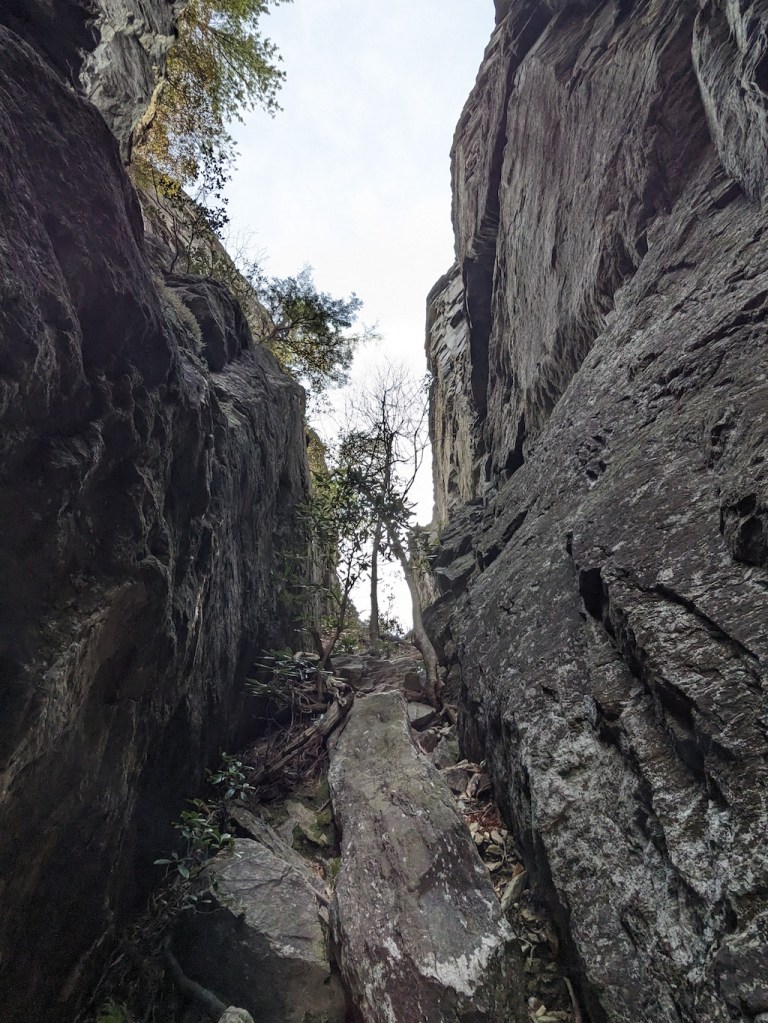
We began the first pitch of The Mummy at 9am, one hour and ten minutes after we began our hike. We thought we were making decent time, but remember, Karsten Delap finished the whole linkup, car-to-car, in 1:24. He would be well into his run back up the trail, having climbed approximately 1400 feet of rock with descending and hiking in between, by the time we started our first climb. Holy shit!
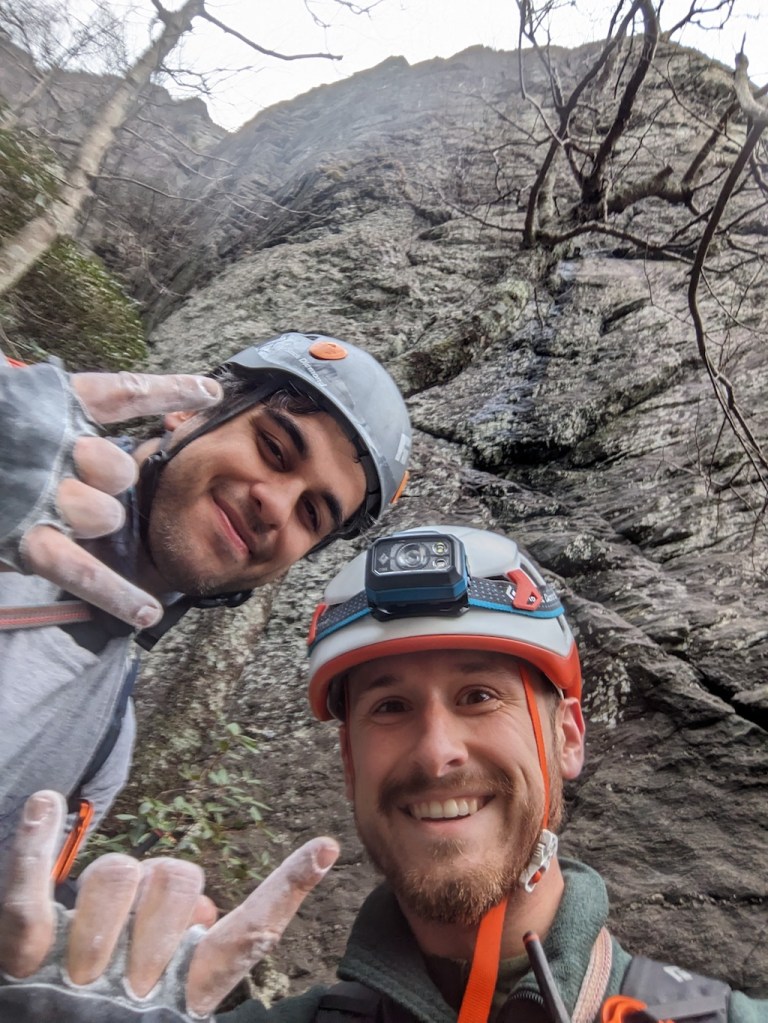
We planned to climb the route in two pitches, linking up to the big belay ledge at the top of the second of three pitches described on Mountain Project. The climbing was easy and fun–compared to the Gunks where I had done most of my climbing this season, the route felt soft for 5.5. The crux of the route was a short section of gently overhanging, juggy climbing up a crack system. I made it to the spacious belay ledge and built an anchor with three cams placed in an irregular vertical crack.
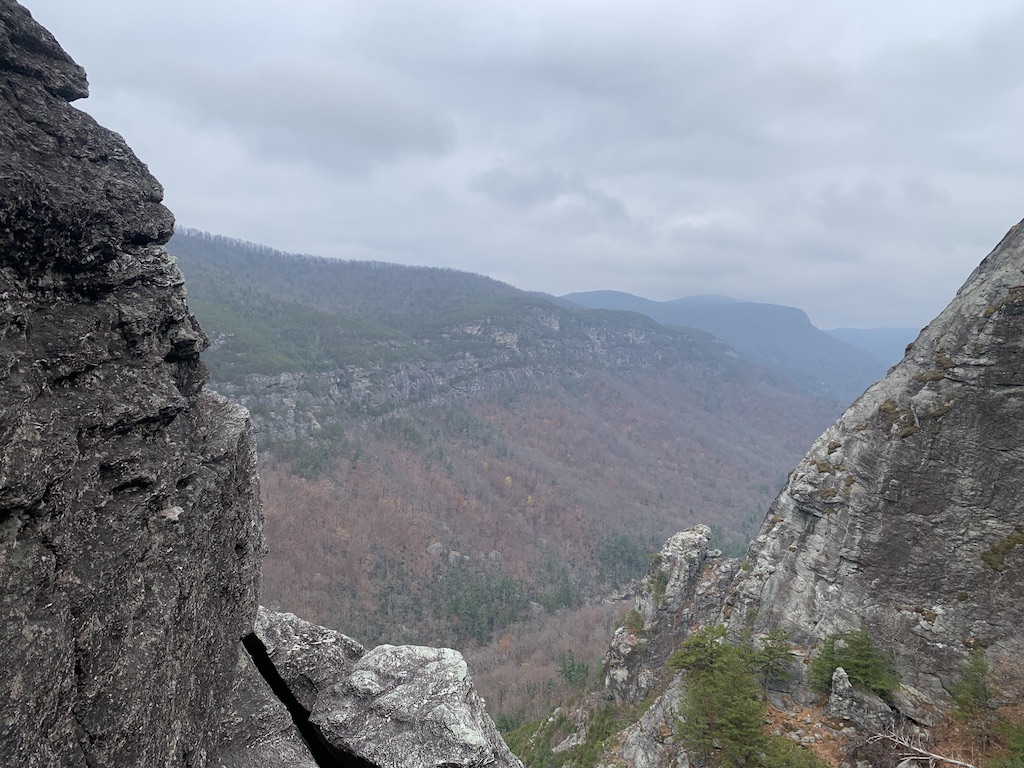
Mitchell followed the first pitch and after a quick changeover, headed up his first lead of the day, which would end on the top of the buttress. He climbed up some exposed terrain to a notch, where he disappeared out of sight.
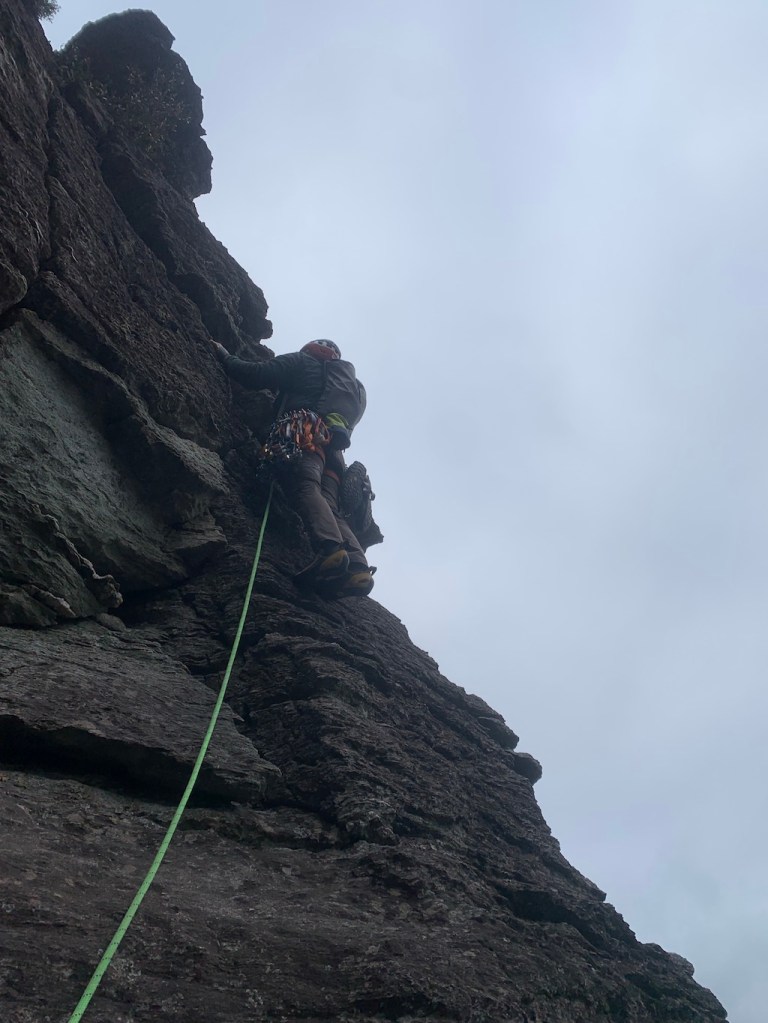
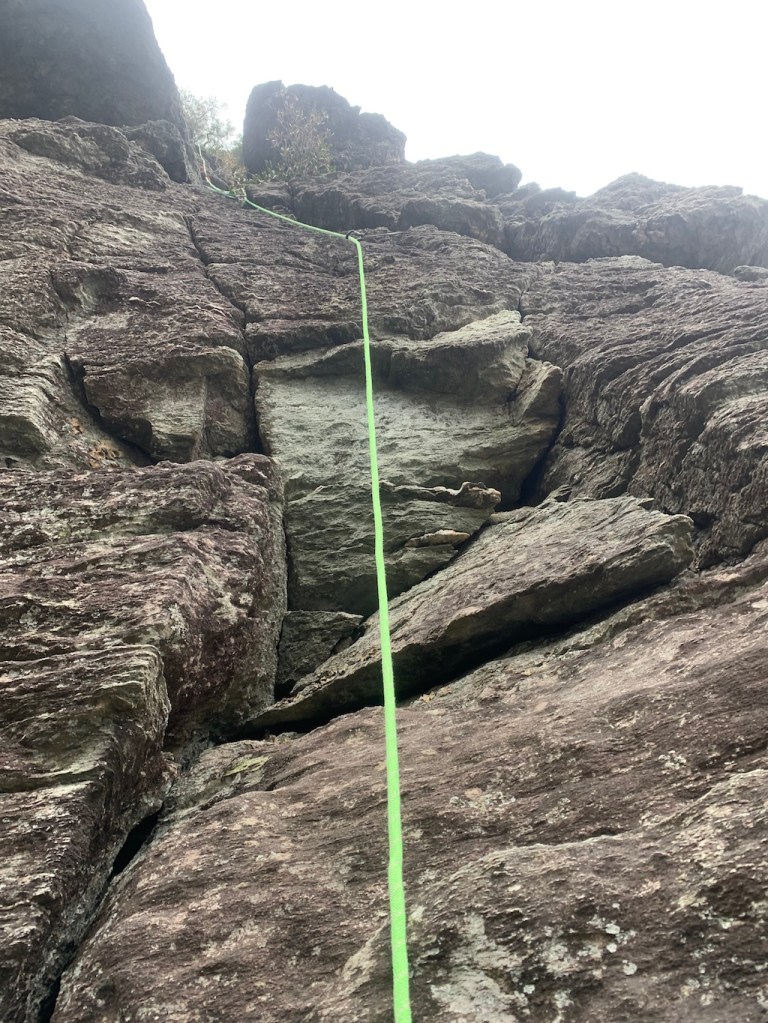
Before long, he radioed down to let me know he was off belay–he brought me up off of a pine tree, and we made it to the top at around 10:30am.
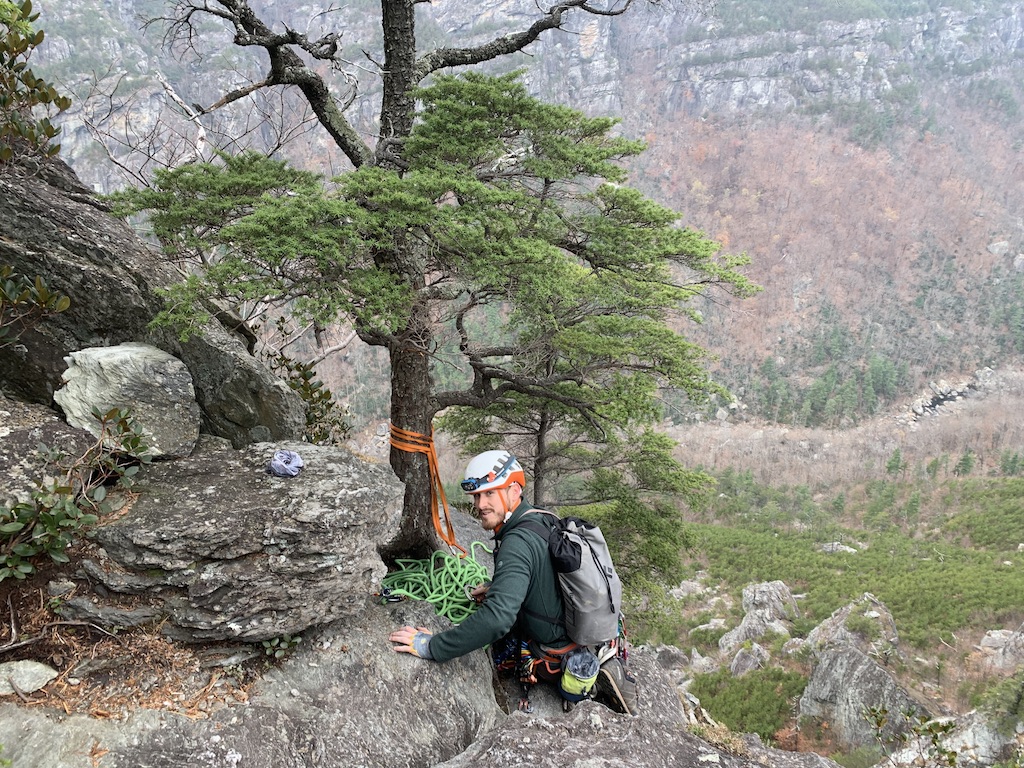
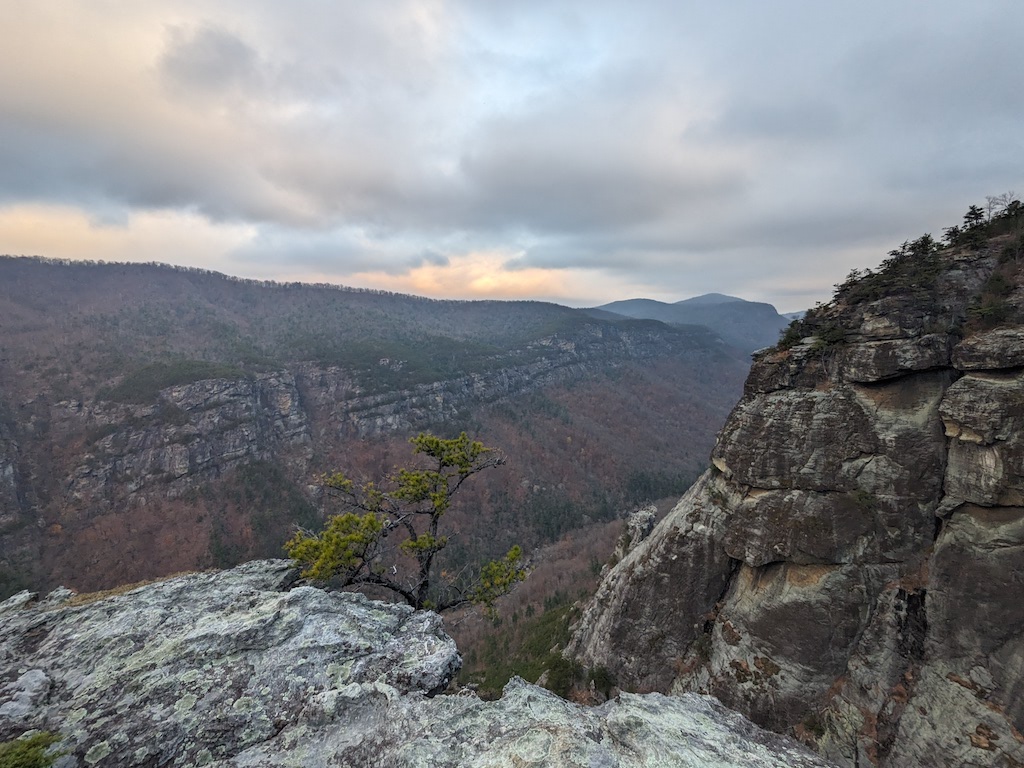
We located the rappel gully fairly easily and headed back down to the base of the buttress, where we soon found ourselves at the base of The Daddy, our second climb of the day. As we hiked down, we noticed a party ahead of us belaying their leader from the first big ledge, so we opted to take a break to hydrate and have a snack. Mitchell produced an assortment of beef jerky, pistachios, and sour gummy worms from his bag and we fueled up. This break would be our only properly relaxed sit-down break of the day, despite the fact that we would end with a moving time of about 12 hours and 40 minutes.
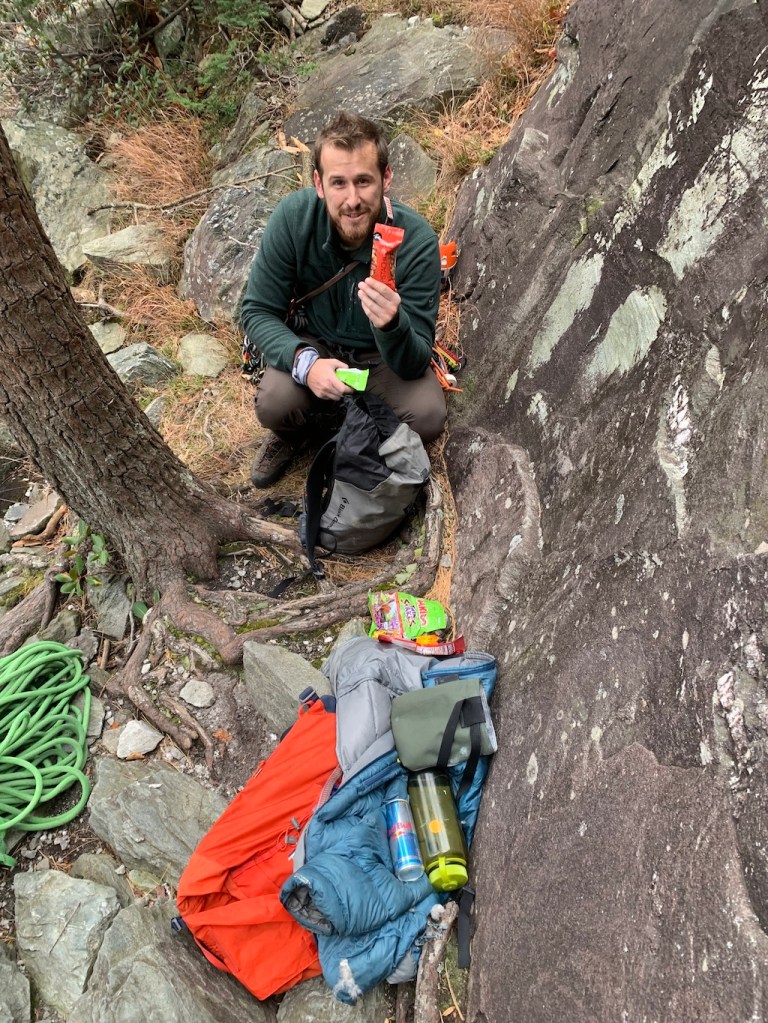
With our snack break behind us, and the party ahead established on the next belay ledge, we got ready to head up The Daddy.
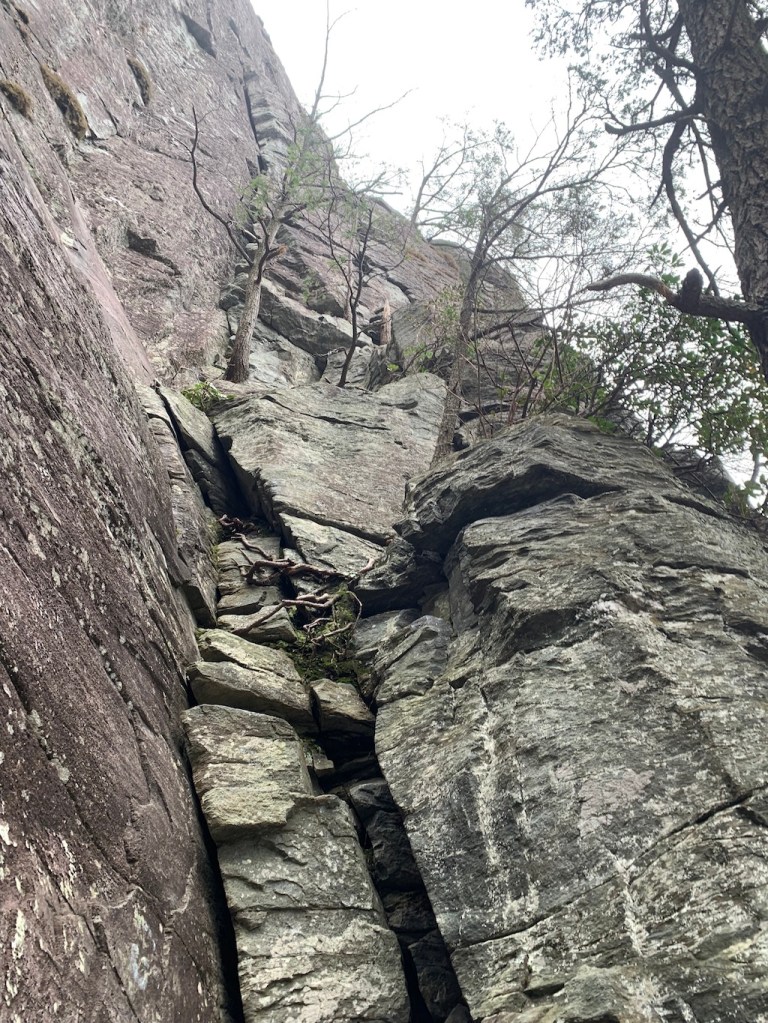
The route promised the most varied and interesting climbing of the day, starting up a blocky gully before reaching more vertical terrain. A hanging flake then leads to a vegetated ledge system, where we planned to cut the corner along the 5.8 direct line. The final pitch traverses across to an easy face which ends at an alcove/chimney. Upon exiting the alcove, the route heads up what appeared from pictures to be a splitter hand crack in a dihedral, after which the route followed a final crack system to the top.
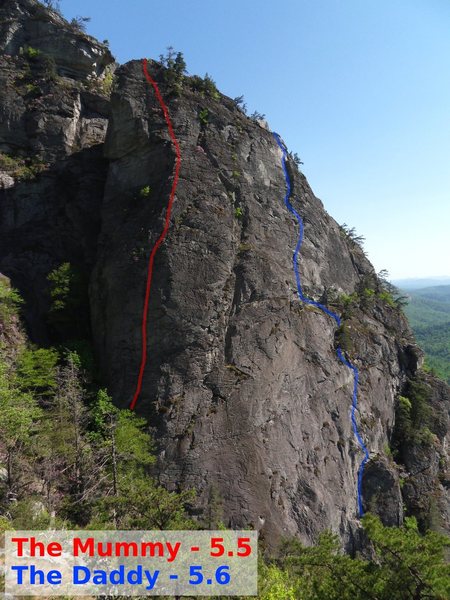
We started up the first pitch of the route at around 11am. I led up the easy gully to the big ledge without much difficulty, though I did have one spooky moment when, as I exited the first intermediate ledge, a microwave-sized block shifted ever so slightly under my weight. If I ever come back, I would pitch the route out differently—a climber we met in the parking lot at the end of the day reported that a 70m rope reaches all the way up to the top of the “Z pitch” ledge system if you take the direct line. Linking up to there and skipping the middle belay would definitely save time. That said, first belay was spacious and in a wonderful position overlooking the Gorge.
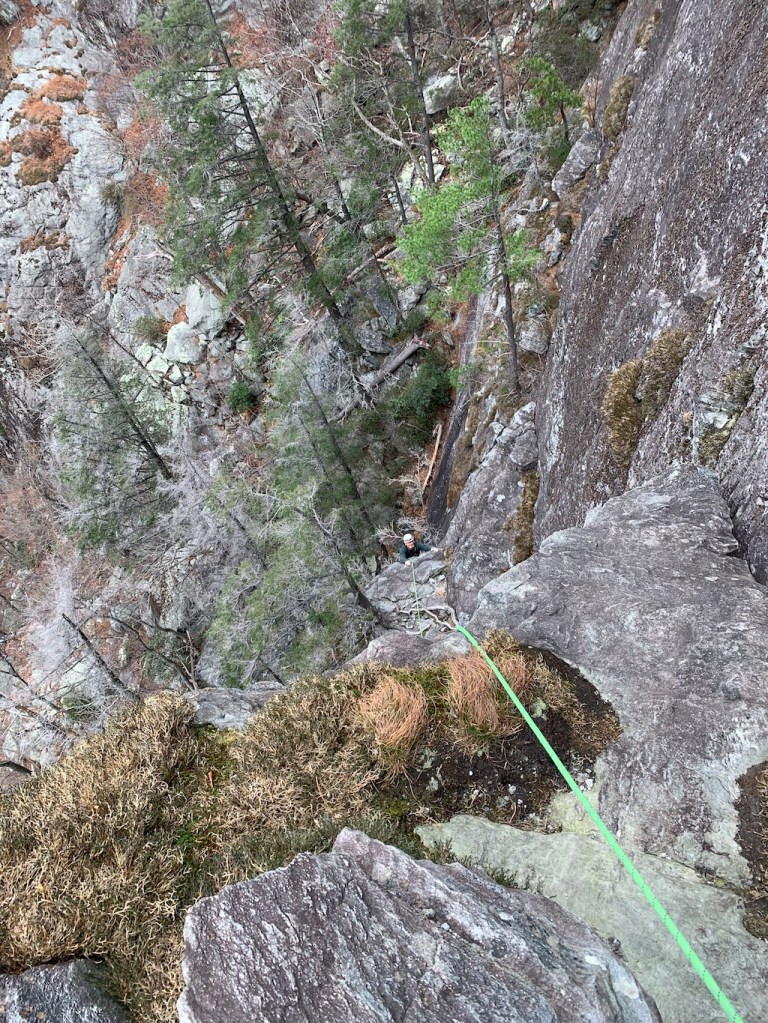
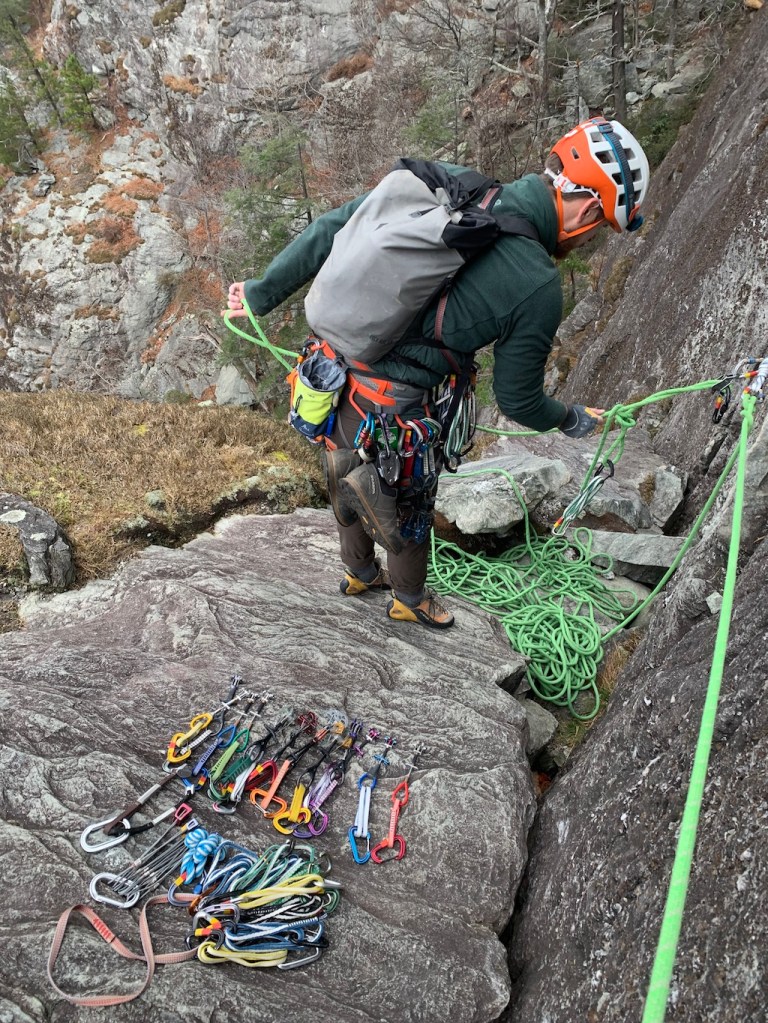
As it went, Mitchell took over the sharp end and led up the cool hanging flake feature and through the ledge system, pulling a few 5.8 moves to skip the wandering, rope-drag incurring ledge scramble. The direct variation involves only a couple moves of very manageable 5.8 climbing, and I would highly recommend it as a way to simplify the route to anyone feeling up to it. Overall, I thought this pitch had some of the best climbing of the day. Mitchell built a belay in some cracks about halfway across the left-trending ledge and brought me up to the belay.
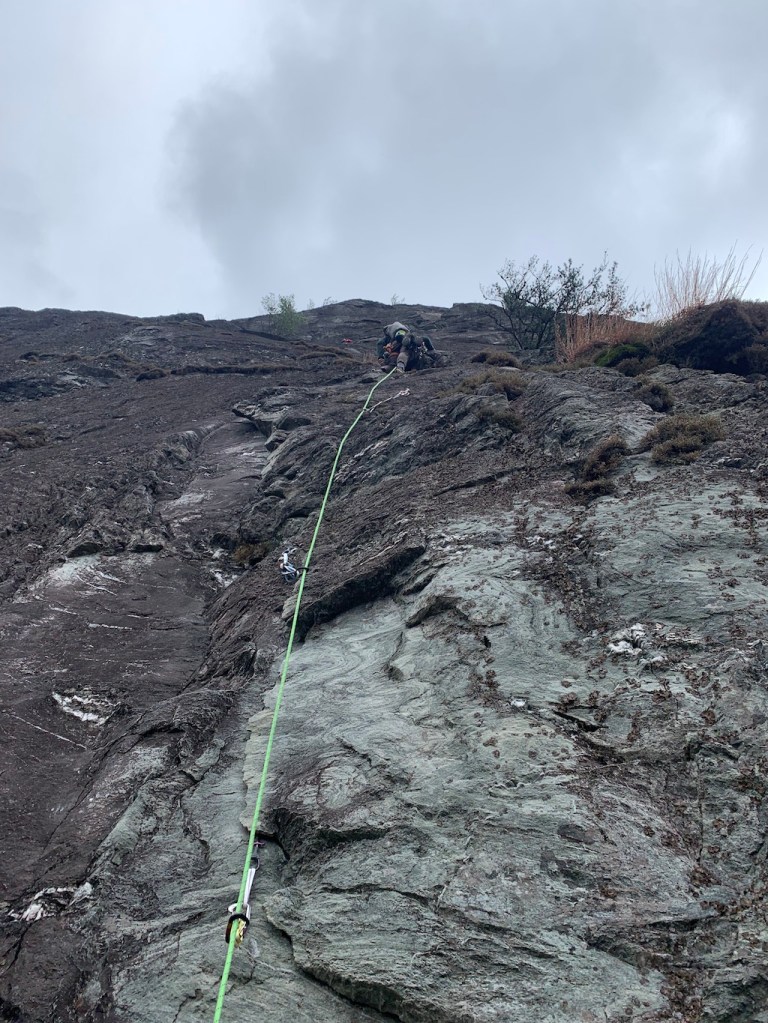
I took over the lead for the final pitch, which started out moving up easy but exposed terrain, traversing right toward face climbing into to the alcove and splitter described above. Historically, climbers have belayed in the alcove, but I planned to link the climb all the way up to the top. In light of this plan to link pitches, the beginning of this pitch proved challenging to protect, not because placements were difficult to find but instead because the wandering nature of the climb was such that placing too early, and extending the placement too little, would lead to horrendous rope drag at the top of the pitch. By the time I made it to the alcove, I was experiencing pretty bad rope drag—I considered stopping to belay for a moment, but ultimately elected to keep moving, as the climbing had been fairly easy so far and I felt confident. I squirmed out of the chimney and found myself at the base of the “splitter crack.”
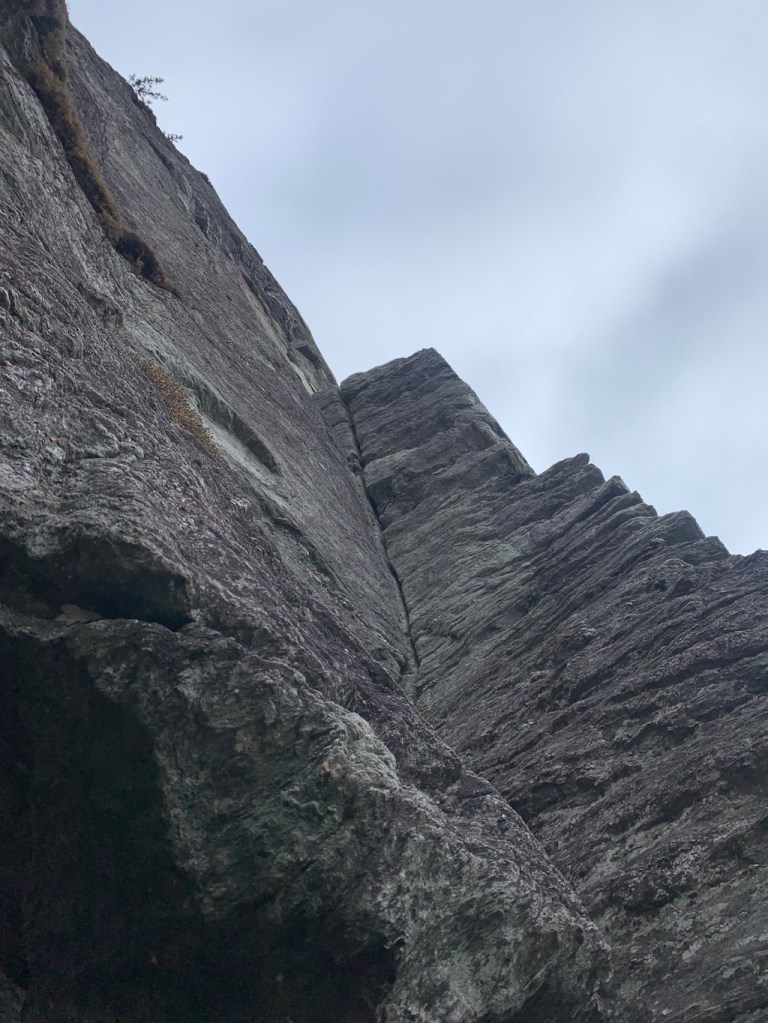
I was disappointed to find that the so-called splitter crack was climbed easily using face climbing and stemming techniques, and that it was not well suited for the juicy hand jams I expected to find. The most strenuous aspect of this portion of the route was not the climbing itself, which was comparatively easy, but the absolutely heinous rope drag which was pulling me down and backwards with every move. I followed the crack to its top and popped out at the base of a final section of face climbing. The climbing in this section was fun, better than the “splitter” and its disappointing lack of jamming on the previous section. But by the time I reached the top of the climb, the rope drag was so bad I was having to literally haul up slack by hand in order to make upward progress. I pulled up one last armful of slack and made the final moves (which felt dicey given the conditions) over the lip and onto the top of the buttress. I tied off a tree and brought Mitchell up, who reached the top of the climb at about 2:30pm. We had burned three hours on the climb, and realized we had better hurry if we wanted to avoid finishing the day by headlamp.
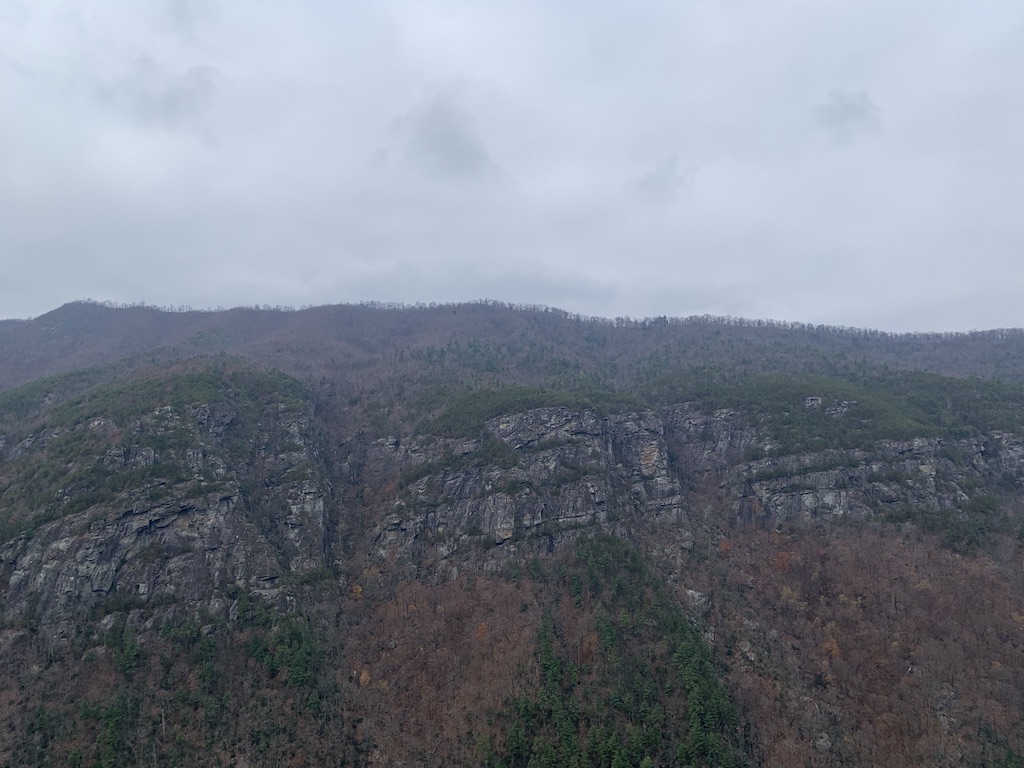
We located the rap gully one last time and headed down toward the base of The Prow, our last climb of the day. We hoped the route, rated 5.4 and therefore the easiest climb of the day in terms of technical difficulty, would go smoothly so we could start the hike out before the sun went down around 5pm. But reality shaped up to be much less smooth than we hoped. The Prow begins on a ledge part of the way up a distinctive low angle rock formation. These photos shows the view of the formation we had from the Mummy buttress:
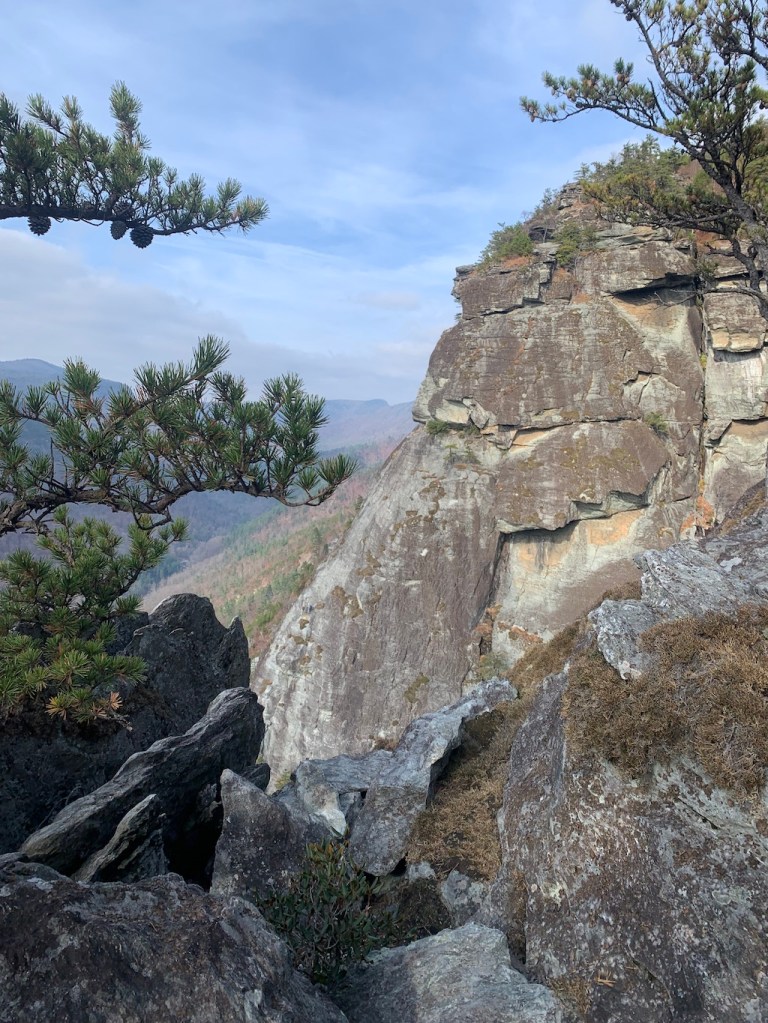
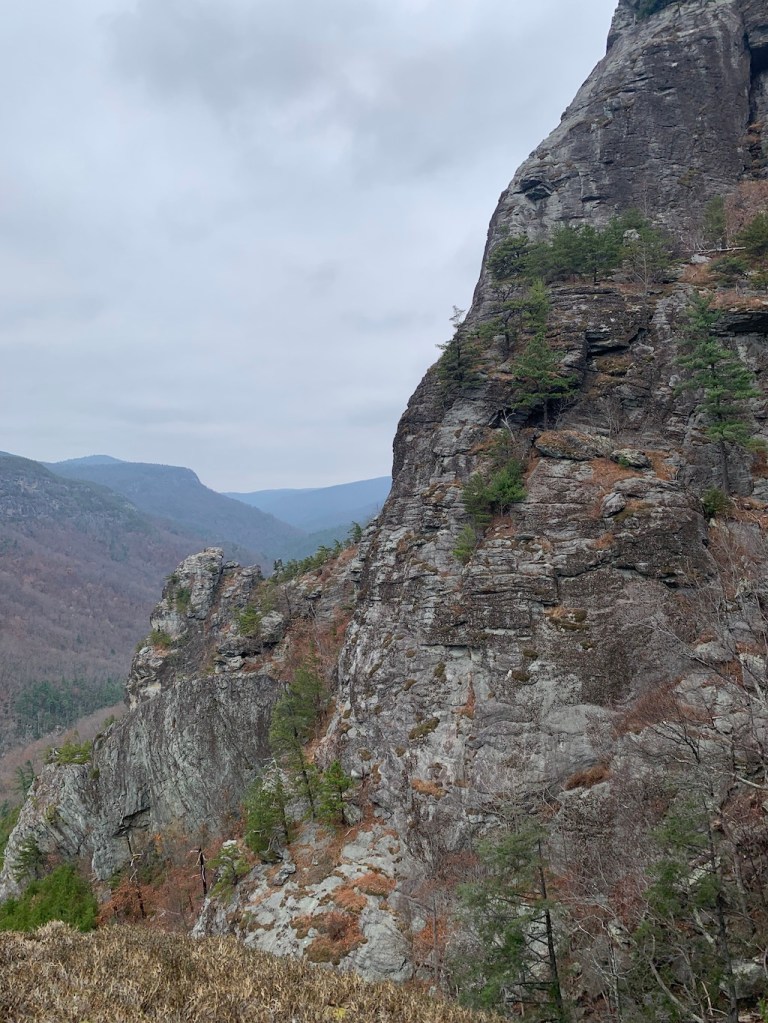
The route follows the slabby left edge of the rock silhouette up to a big ledge, then heads up an exposed platform feature and arete ending on a big ledge. Finally, the route traverses what Mountain Project describes as “some goofy stuff” before exiting up a dihedral to the top-out. From there, an easy scramble leads back to the climber’s trail and eventually, The Cube. I knew from my research that finding the base of the route would involve scrambling across a ledge, but I misremembered the exact description. In my faulty recollection, the ledge leading to the base of the route proper is “eye level with the start of The Daddy.” In fact, the ledge that’s eye level with The Daddy is the wrong ledge – the correct ledge is one ledge up, higher than The Daddy’s start. We passed the correct ledge heading downwards on our approach, and figured it was the wrong one because the walk across it looked scary. We hiked downwards to the lower ledge, scrambled across, and found ourselves below an easy looking, but completely lichen-covered face that was clearly not the correct start for The Prow. I was aware that on Mountain Project, there was a listing for “The Prow (lower pitches)”: that read: “Commonly overlooked or mistakenly climbed, there is two lower pitches of the Prow that get little traffic.”
We discussed what to do while the sun dropped further and further and nightfall approached. We had hoped to start the route by 3pm, and it was well after then by this point. We had to make a decision quickly and keep moving, so we ultimately decided to roll the dice and head up the easy-looking, dirty mystery pitch in the hope that it would pop us out at the base of the route proper. Sadly, as we were in a hurry, we weren’t able to take many pictures of this part of the day.
I started climbing up the very easy but dirty and lichen-covered face. The technical difficulty of the climb felt like 5.2 or 5.3, so I ran it out 20+ feet at a time, placing gear before moves that felt a little less like scrambling and more like 5th class climbing. I was moving quickly and before long ended up on a decent sized ledge. I looked up and saw a massive pine tree on what looked to be an even bigger ledge, probably about 25m further up. I radioed down to check how much rope I had left and based on Mitchell’s estimation, decided to keep climbing. When I neared the ledge, I found that the sloping lip of the ledge was covered in pine straw, and that the big pine that dominated the ledge had branches stretching out in all directions, completely covering my path. I groveled upwards on hands and knees, pulling on handfuls of dirt and pine straw, dragging the rope behind me up and over sticky pine branches, vertically bushwhacking and trying to make it onto the clearing on the other side of the tree on this big ledge. It was the dirtiest and most ridiculous climbing I’ve ever done, and when I looked up and saw the exact spitting image of the correct start of The Prow it struck me as hilarious that somehow this heinous climbing was in a sense “correct.” But the fun had only just begun.
I built a quick “alpine anchor” near the back of the ledge with a .5 and .75 Z4, to which I clipped the belay device directly, and radioed down to Mitchell that he was on belay and could start up the climb. We were both in a time-saving frame of mind, and he asked if I thought he could climb the pitch in approach shoes, to which I replied in the affirmative. After all, it was dirty, but still very easy.
Mitchell started climbing fast, and I was pulling up armfuls of slack as quickly as I could — but all of the sudden, the rope went taut, weighting the anchor. I was confused. Had he really fallen? On the 5.2 lichen pitch? I radioed down to ask if he was ok. He reported that he was fine, but had fallen approximately 20 feet after slipping on a patch of lichen, nearly kissing the ground at the bottom of the fall. There wasn’t much slack in the system—but when 70 meters of dynamic rope are in the system, there’s plenty of stretch before the rope fully brings the climber to a stop. So he seems to have taken the world’s longest top rope fall, slowly boinging down 20 feet until the elasticity of the rope brought him to a stop.
Mitchell then absolutely sprints up the ~220 feet of lichen covered scrambling with a vengeance, as I took in rope as fast as I could to keep up. It couldn’t have been more than a few minutes later when he popped up on the vegetated tree ledge. We had a laugh about the worst pitch of the day and the top rope “whipper” and got ready to start the Prow proper.
I climbed up the easy first pitch of the route, which follows a shallow corner up to more low-angle climbing ending on a large ledge with an “expansive slab” above. From that ledge, Mitchell and I decided over a brief radio conversation that I had enough rope to continue climbing through the second pitch. The second pitch was excellent, surprisingly some of my favorite climbing of the entire day despite the easier technical grade. It was also somewhat run out, especially towards the top. I was glad to get the full Linville slab experience, but as I approached the last section of the pitch, the climb was getting spicy. I was only finding placements every 20 feet or so, and the protection I found before I fired the last crux section involved two equalized micro-cams in a shallow, flaring horizontal. Two bad placements equals a good placement? The climbing itself wasn’t terribly hard, but it was “engaging,” as they say, pulling the last few no-hands slab moves with (questionable) gear 20 feet below. I was also running out of rope, and when I pulled onto the ledge I had to build an anchor near the lip since I didn’t have enough rope to make it to the back of the ledge. Luckily, there was a car-sized boulder with a perfect crack for finger sized cams to build a belay. Linking the first two pitches made for a fantastic, fully 70 meter long slab-fest and the view from the belay was incredible.
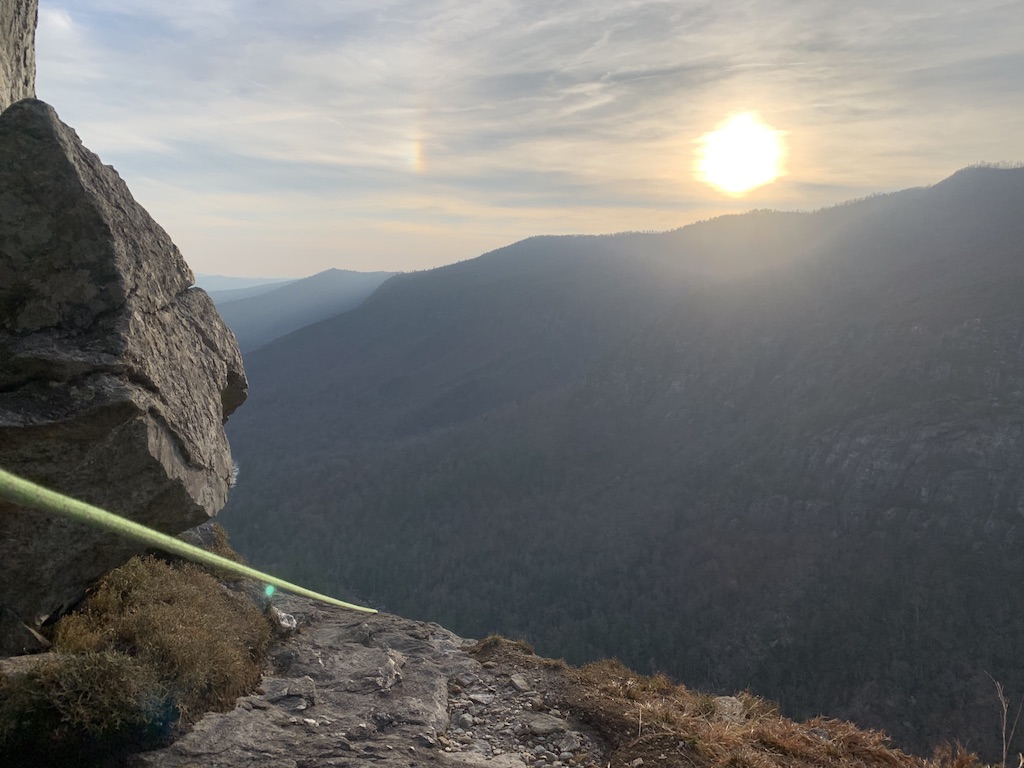
I radioed down to Mitchell that he was on belay, and he absolutely rocketed up on follow. I was pulling up slack as fast as I could, and when he pulled onto the ledge he was breathing as if he had just run a race. We took a quick snack break as the sun disappeared over the mountains to the west. With darkness approaching, we accepted our fate, and Mitchell prepared to lead the classic, exposed third pitch of the route, heading up the super exposed platform feature and arete, and finishing at a large ledge.
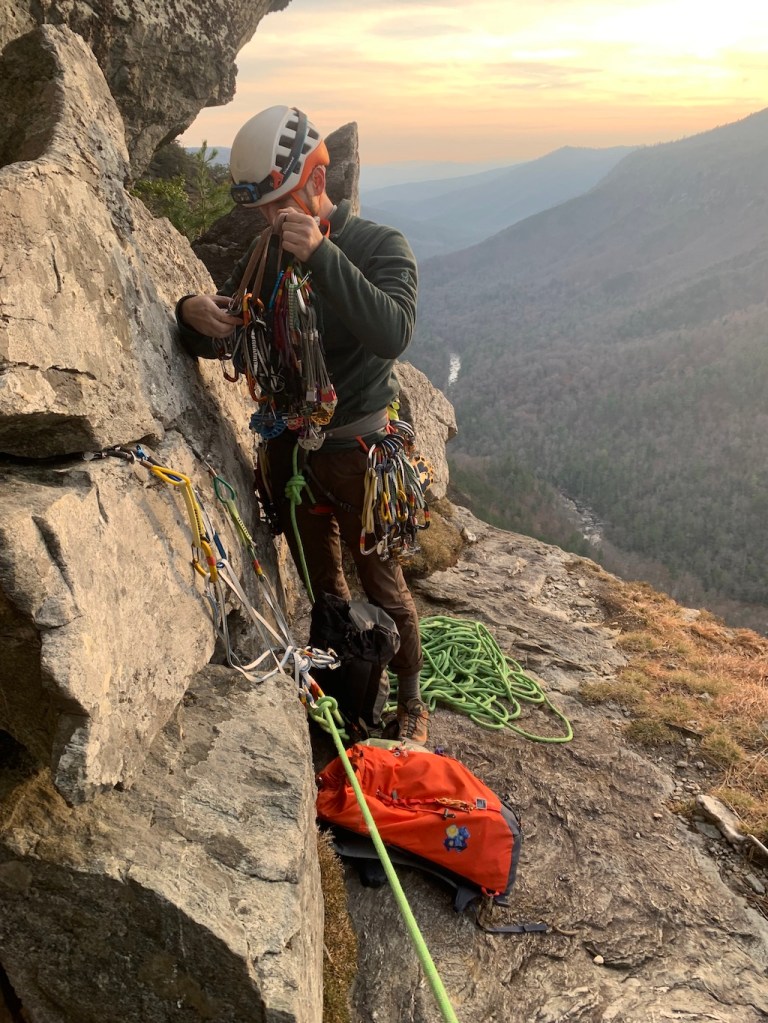
Mitchell led up the third pitch of the route and built an anchor.
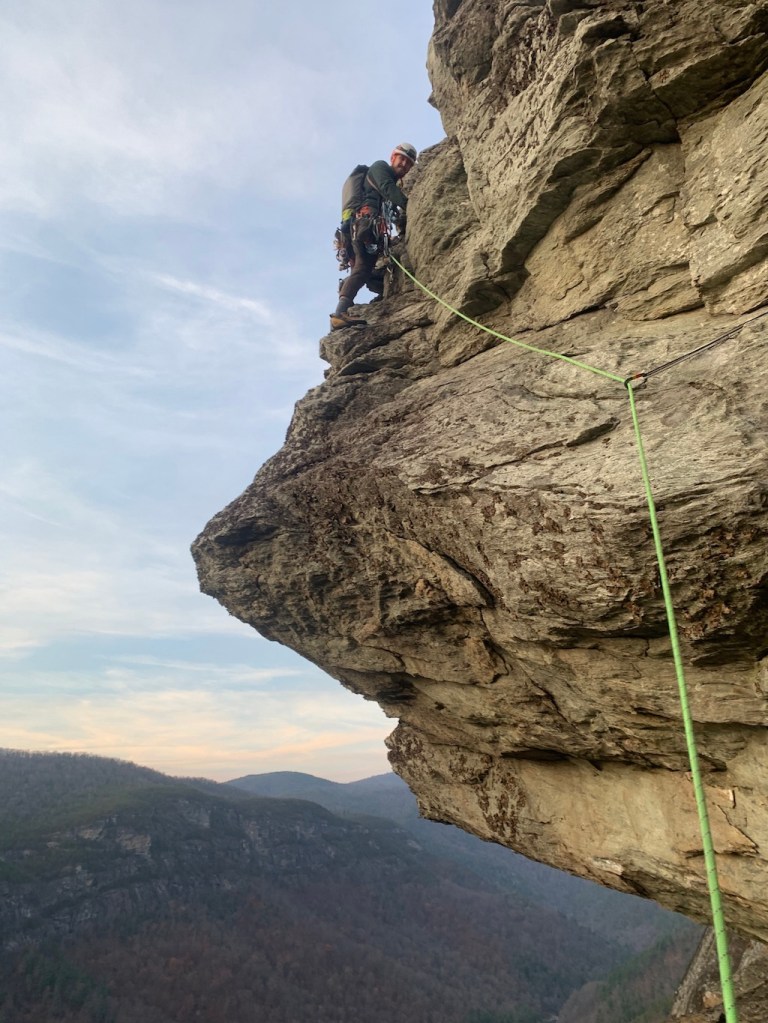
By the time I started up, we were properly benighted.

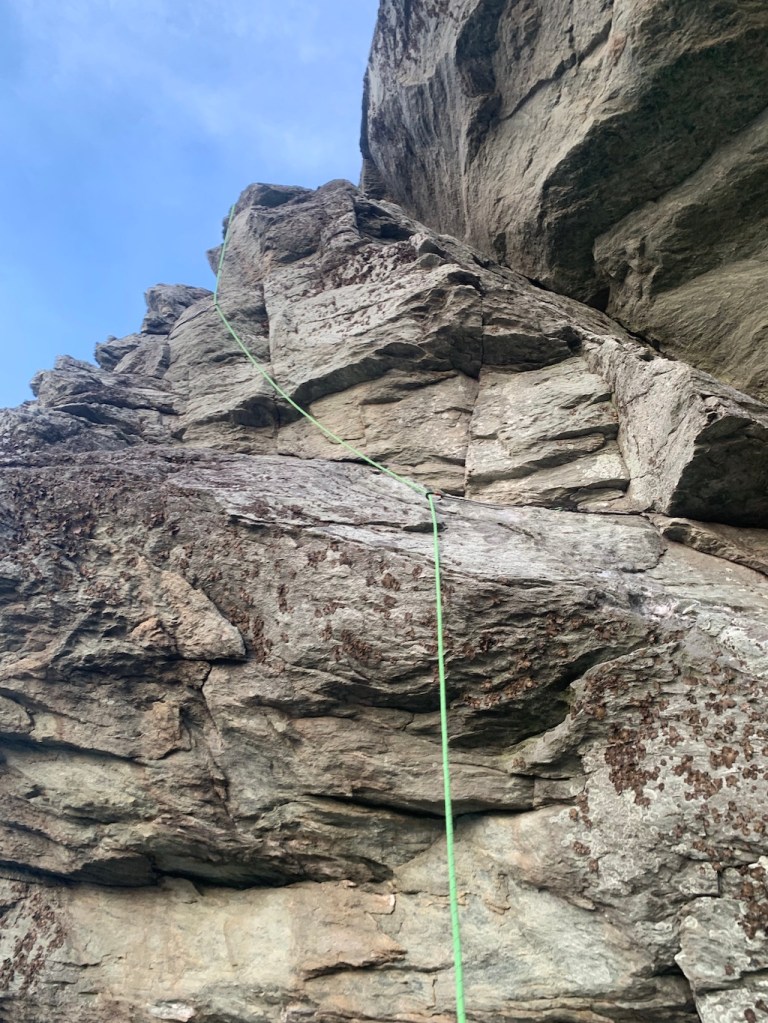
Headlamp on, I climbed up the arete toward the final belay. We started in the dark, and would finish in the dark too. The description for the fourth pitch was mysterious (“traverse some goofy stuff across a gap and up into vegetation”) and the pitch itself was ridiculous—not difficult, exactly, but awkward and a tiny bit scary, especially in the dark. The “goofy stuff” was an anvil-shaped, narrow catwalk of rock with an overhanging face immediately above, close enough that I had to crawl/hand traverse across and stretch across the gap—with serious exposure below—to get to the corner. I scampered up, pulling one final awkward and strenuous move to arrive at the top of the climb. I belayed Mitchell up using a big tree. It was completely dark, but we had finished all of the technical climbing for the day! Woohoo!
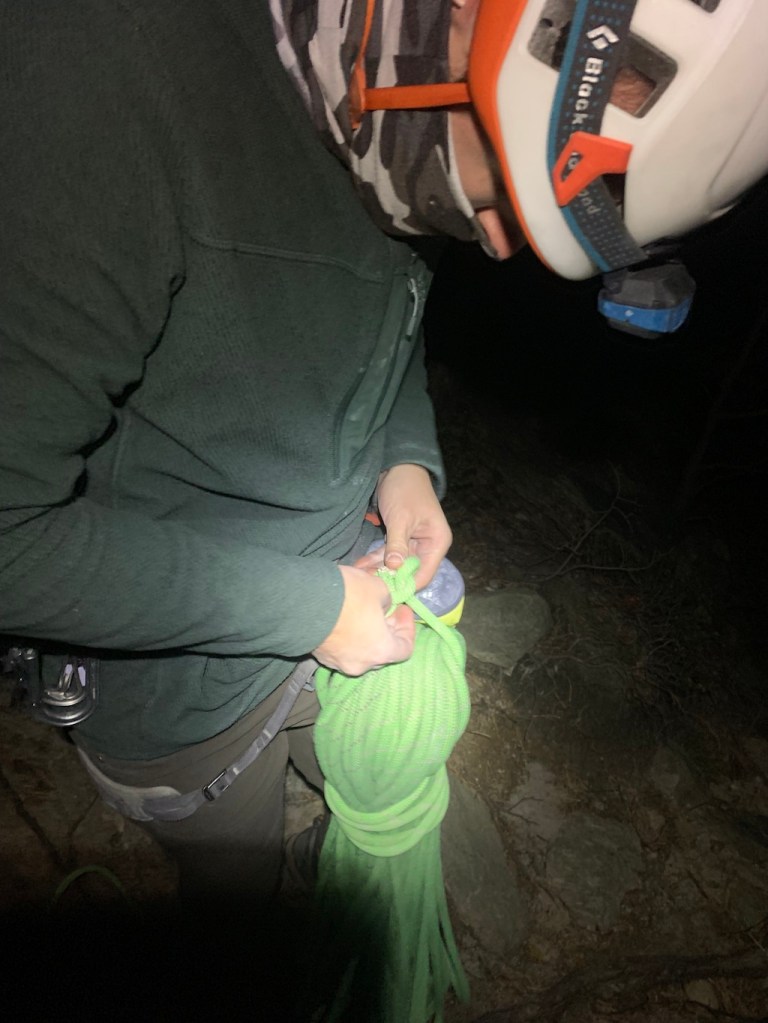
We had a lot of water left, so we drank plenty to lighten our load as we repacked our gear and prepared for the hike back to the car. We then scrambled up some fourth class rock, which brought us back to the main climbers’ trail.
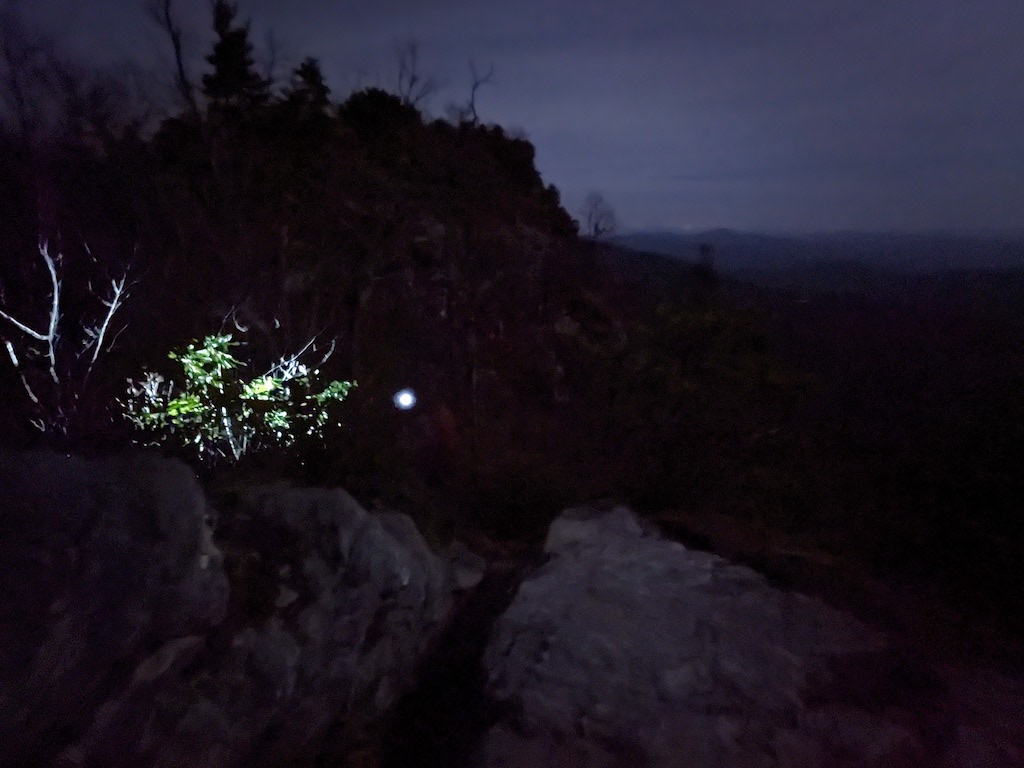
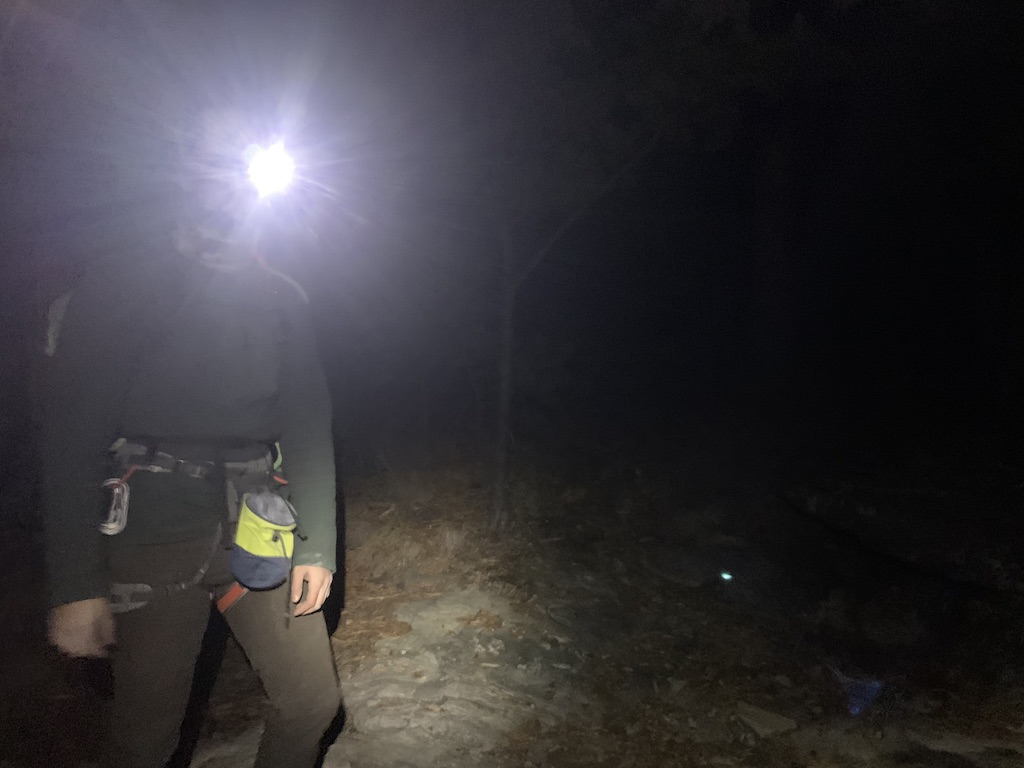
It had been a long day, and the hike out was strenuous and seemed to go on forever. But the moon was full, and we were stoked to have the linkup in the bag. We eventually made it back to the cube, and hiked back along the ridge to the car.
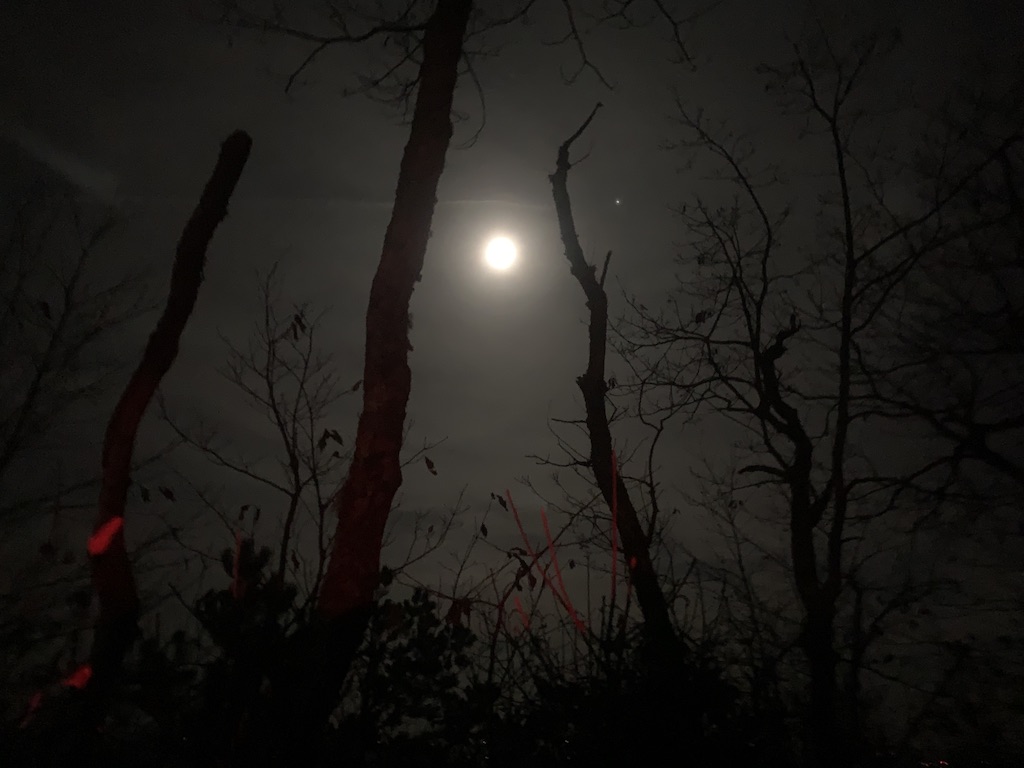
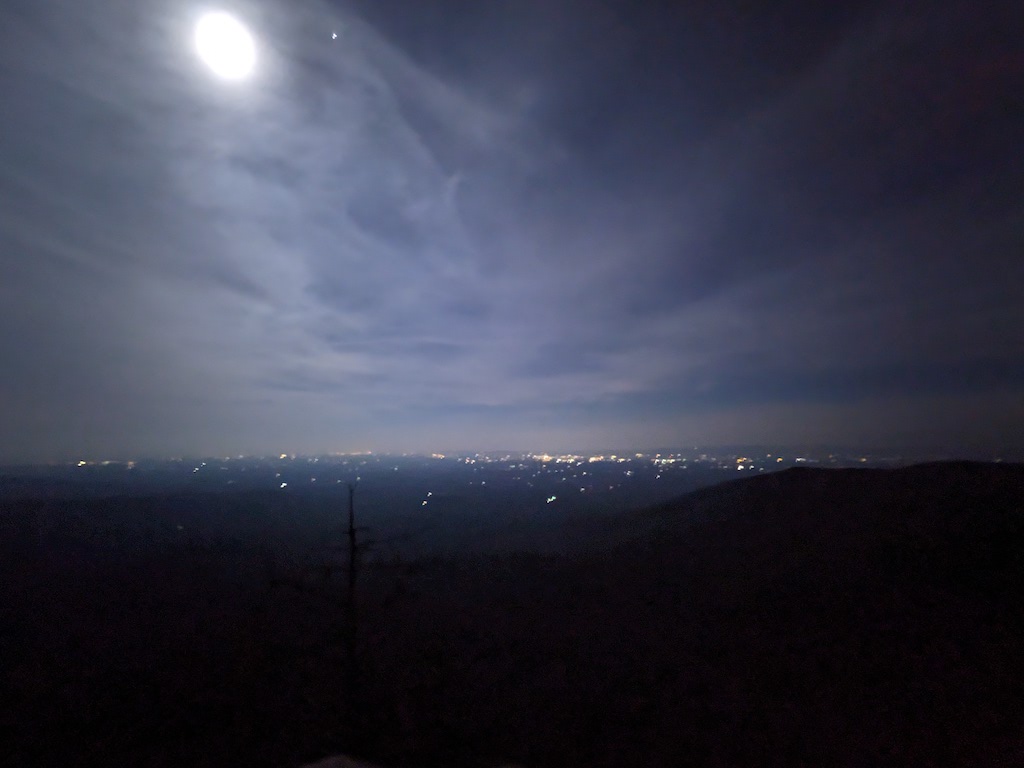
By the time we made it back, it was 7:30pm—a glacial 12 hours and 40 minutes after we started our hike. We didn’t set any speed records, but we made it back safely, and that’s the most important thing.
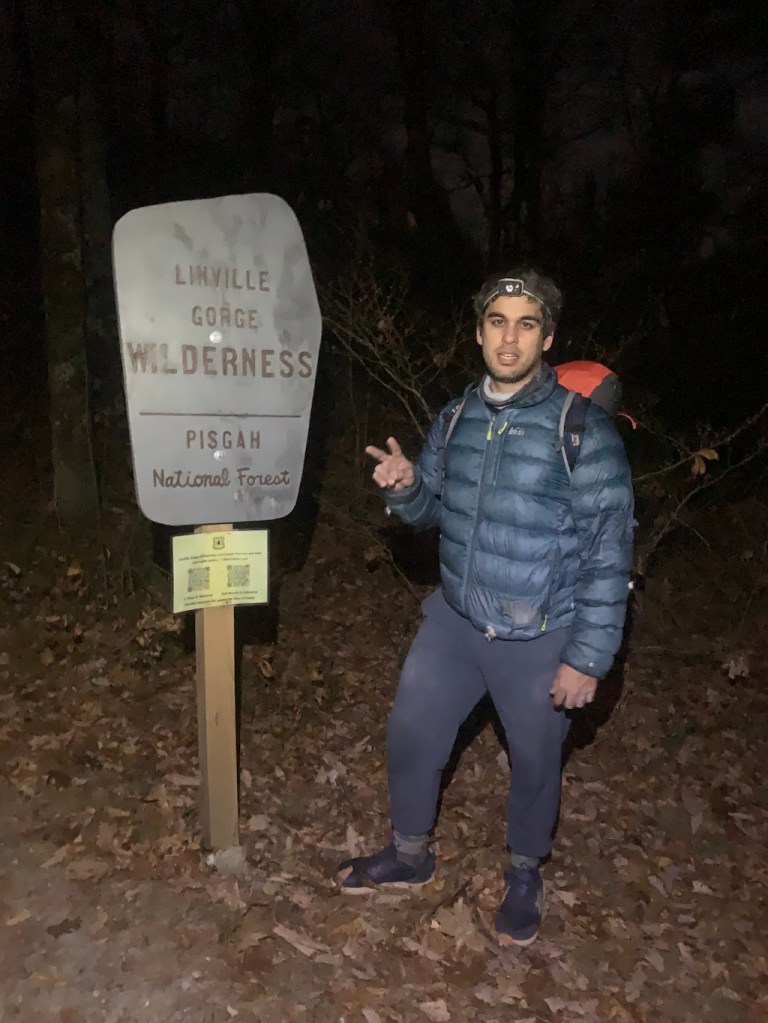
I would like to go back one day and try to do the day more efficiently. In the future, I would probably take the vague third class trail into the base of the buttress for the first climb, rather than try and find the rap gully from the climber’s trail. I would also climb The Daddy in two pitches, rather than three, belaying on the left-trending tree ledge halfway up. I would also skip the extra ~220 of vertical bushwhacking and start The Prow where it actually starts (lol). But overall, considering it was our first time there, I was pretty happy with how things went.
When we got back to the car, we ate a ton of snacks that Caroline packed for us the night before. The menu included perfectly medium-boiled eggs, and packets of fancy cheese, which we dipped in Chick Fil A sauce (which I keep stashed in my car at all times). We then drove back to the mountain house where Caroline’s family had pizza and wings waiting for us, as well as the legendary Voodoo Rangers Mitchell had left in the fridge. It was a completely rad day, one of my favorite days of climbing ever. I got to climb three routes that I had been dreaming about since I was a teenager roughing it with Outward Bound. And the day was excellent preparation for future backcountry and alpine climbs—I hope to continue to write trip reports like this one as I (inshallah) continue to follow my dream of progressing into climbing big routes in the mountains. I’m so grateful and excited for the future. Here’s to many more big days in the mountains ahead! Woohoo!
 Timour Kamran, PhD
Leave a comment